WASHINGTON D.C February 15, 2026 – The U.S. Department of Defense has conducted a high-profile airlift operation transporting a next-generation small modular nuclear reactor (SMR), marking a significant step in implementing President Donald Trump’s executive order aimed at accelerating nuclear energy development and achieving energy dominance.
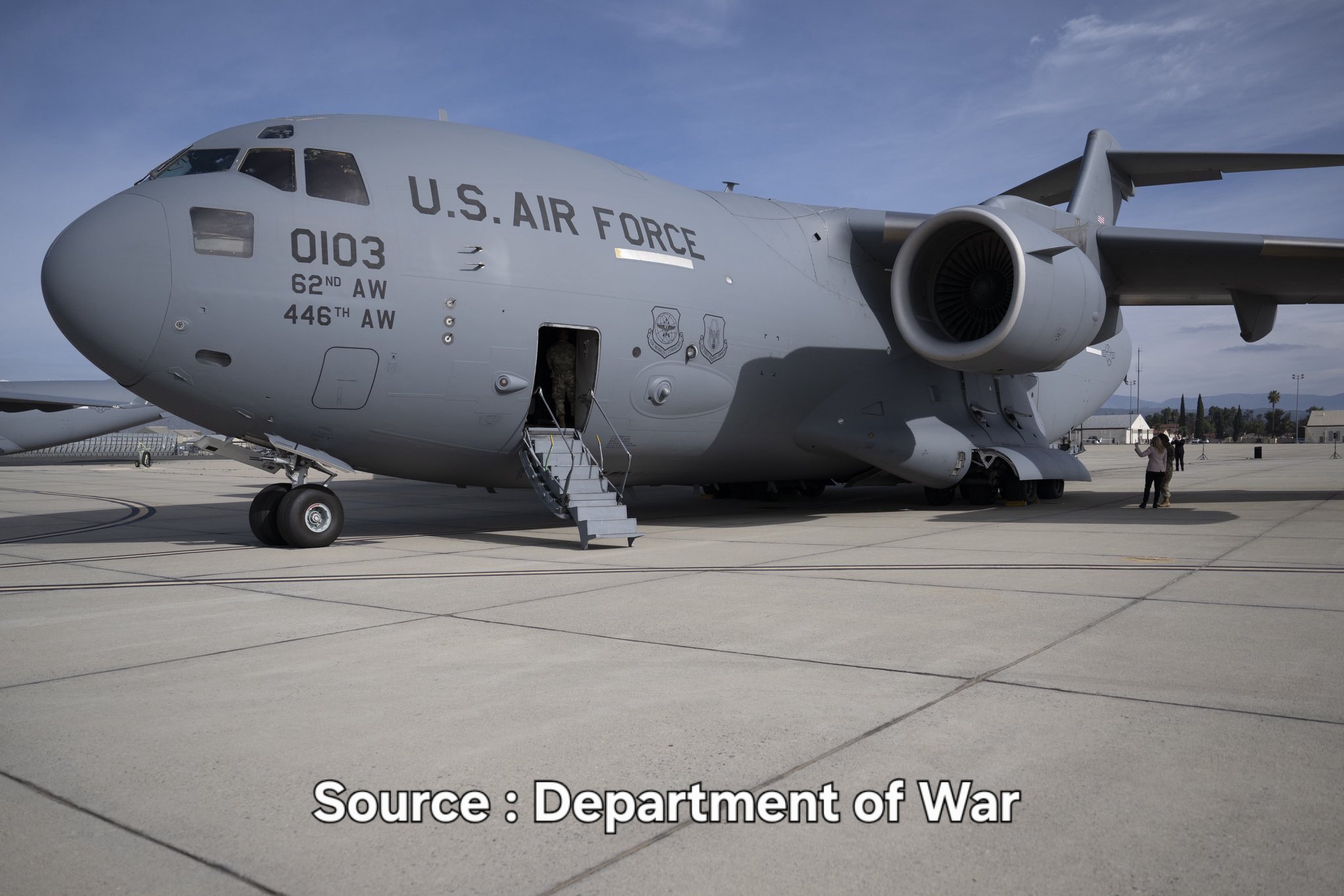
The operation, announced earlier today via the official “Department of War” account on X (formerly Twitter), involved a U.S. Air Force C-17 Globemaster III cargo aircraft. The post stated: “We’re advancing President Trump’s executive order on nuclear energy. Moments from now, we will airlift a next-generation nuclear reactor.”
Accompanying the announcement were four photographs showing the reactor module secured inside the cargo bay of the C-17 during loading and transport preparations. The images depict heavy-duty securing straps, protective coverings, and military personnel overseeing the process at what appears to be March Air Reserve Base in California.
The reactor is reportedly a product from Valar Atomics, a company specializing in large-scale nuclear sites for industrial electricity, process heat, and carbon-neutral synthetic fuels. In a follow-up post, Valar Atomics expressed pride in supporting “America’s warfighters” and shared additional photos of the reactor unit.
According to information shared in related discussions on X, the transport route takes the reactor from March Air Reserve Base in California to Hill Air Force Base in Utah, with final delivery to the San Rafael Energy Lab in Orangeville, Utah, for testing and evaluation.
The airlift has drawn widespread attention and mixed reactions online. Supporters praised the demonstration of American logistical capabilities and viewed it as a concrete move toward expanding clean, reliable nuclear power. Comments highlighted the C-17’s unique role in such specialized missions and called for broader deployment of similar reactors to support domestic energy grids.
Critics, however, raised safety concerns, pointing to past Government Accountability Office (GAO) warnings about transporting large nuclear components over populated areas. Some described the operation as prioritizing political messaging over rigorous safety protocols.
The event underscores the Trump administration’s renewed emphasis on nuclear energy as a cornerstone of national security, industrial strength, and reducing dependence on foreign energy sources. Further details on the specific reactor design and long-term testing outcomes at the Utah facility are expected in coming weeks.
About The Author