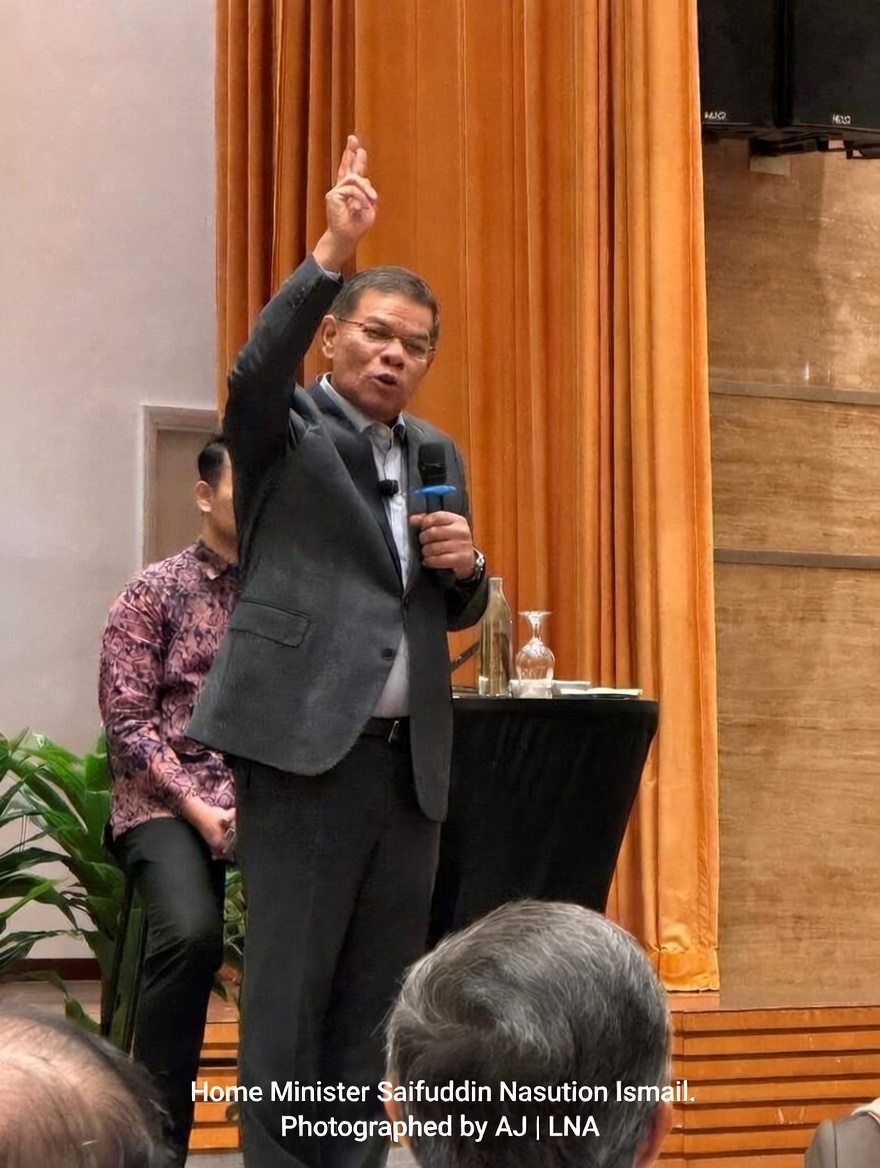
KUALA LUMPUR, MALAYSIA January 28, 2026 – In a recent parliamentary address, Home Minister Saifuddin Nasution Ismail announced that Malaysian authorities successfully recovered and returned RM6.7 million to victims of online scams in 2025, marking a significant increase from the RM508,479.39 recovered the previous year. This disclosure came during an oral question session in the Dewan Rakyat on January 27, where the minister highlighted escalating scam losses totaling RM542 million for 2025 alone.
The minister detailed government efforts to combat the growing threat, emphasizing enhancements to the National Scam Response Centre (NSRC). Now operating 24/7, the NSRC has bolstered its staffing to 41 personnel, including 25 from the Commercial Crime Investigation Department at Bukit Aman and 16 call agents from Bank Negara Malaysia. The center handles approximately 500 calls daily, with about half identified as genuine complaints. These improvements have enabled quicker interventions, including the freezing of suspicious accounts to prevent further fund transfers.
According to the minister, an additional RM34 million was saved and secured pending investigations in 2025, with RM17.5 million earmarked for recovery. He addressed specific Penal Code provisions related to scams, noting 51 cases under Section 424A (involving control of payment instruments like ATM cards, often in fake loan schemes), with 20 individuals charged, 21 under investigation, and others resolved or archived. Sections 424B, 424C, and 424D saw fewer cases, primarily under investigation. “These amendments have enabled better action against account misuse,” Saifuddin explained, countering claims of zero recoveries by affirming official figures from the Ministry of Home Affairs.
Victim profiling revealed that private sector workers are most affected, followed by government employees (8%), students (8%), retirees (7%), and business owners (7.5%). Scams were categorized into e-finance crimes, love scams, e-commerce fraud, fake loans and investments, and telecommunications crimes to improve data collection and response efficiency. The government is also integrating efforts with regulatory agencies like the Malaysian Communications and Multimedia Commission (MCMC) and the Ministry of Domestic Trade and Cost of Living (KPDN) for faster action.
Saifuddin urged the public to remain vigilant against increasingly creative scammer tactics. “If there’s a suspicious call involving finances, verify first before sharing personal information,” he advised. He noted that Malaysia is learning from international best practices, including collaborations with ASEAN neighbors like Singapore, where scam trends are similarly rising. Global recovery rates hover around 10-15%, and Malaysia aims to exceed these benchmarks through strengthened standard operating procedures (SOPs), such as accepting complaints immediately within 48 hours to reduce confusion.
The Madani government remains committed to addressing victim concerns and empowering the NSRC. The full session, broadcast live, underscores ongoing parliamentary scrutiny of cyber threats in the country.
For more details, watch the excerpt shared by the Home Minister on social media.
About The Author