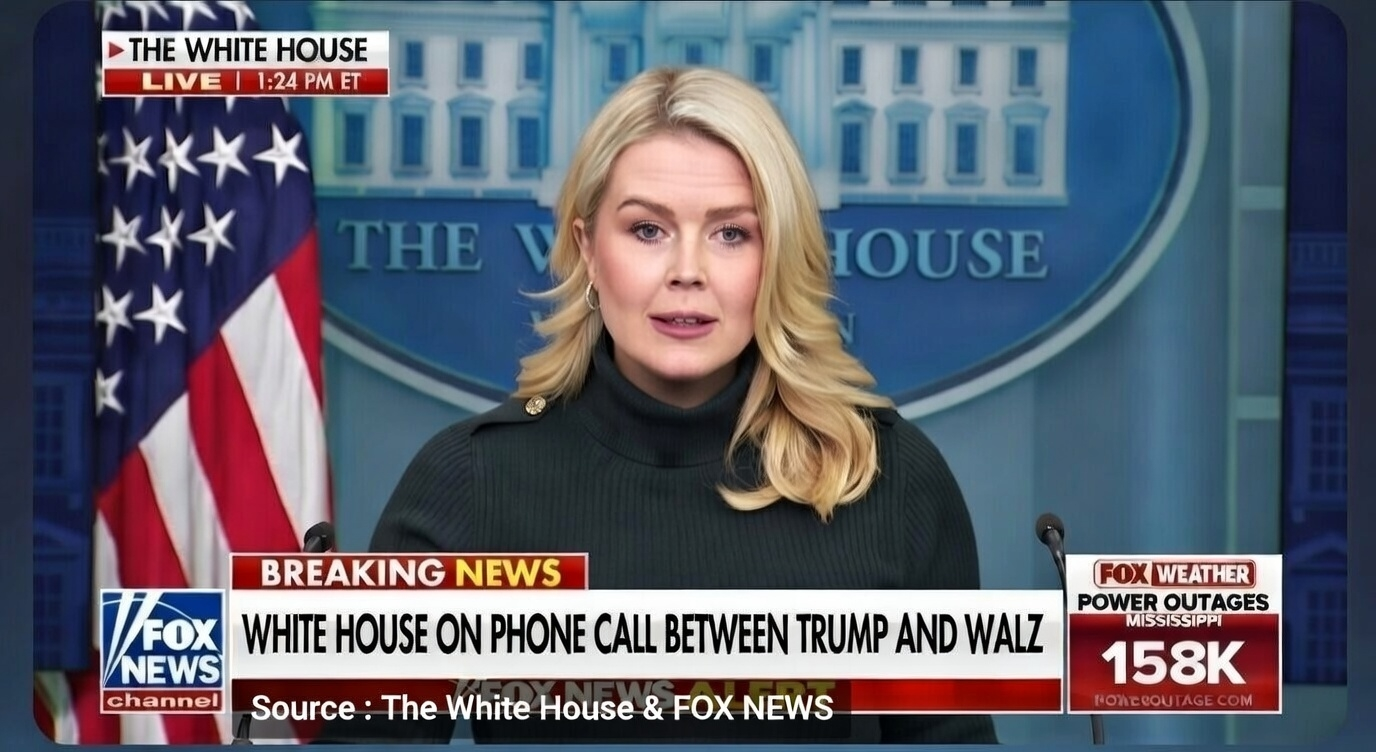
WASHINGTON D.C January 26, 2026 – In a bid to restore “law and order” amid escalating tensions in Minnesota, President Donald Trump engaged in a direct conversation with Governor Tim Walz on Monday, proposing a framework for enhanced collaboration between state authorities and federal immigration enforcement. The White House described the call as productive, emphasizing the need to deport criminal undocumented immigrants while urging local leaders to end sanctuary city policies.
White House Press Secretary Karoline Leavitt detailed the president’s proposals during a briefing, stating that Trump outlined four key measures to address public safety concerns. These include turning over incarcerated undocumented individuals with criminal records to federal authorities for immediate deportation, ensuring state and local police hand over arrested undocumented immigrants, and requiring local law enforcement to assist in apprehending those wanted for crimes. Leavitt stressed that such cooperation could prevent the need for additional federal intervention, noting, “ICE and local law enforcement can peacefully work together, as they are effectively doing in so many other states and jurisdictions.”
The discussion comes against the backdrop of recent unrest in Minneapolis, where protests against intensified Immigration and Customs Enforcement (ICE) operations have turned volatile. Demonstrations erupted following a series of incidents, including a fatal shooting involving federal agents and local residents, prompting calls for an impartial investigation. Thousands of protesters have gathered in the city, braving cold weather to demand the withdrawal of federal forces, which include Border Patrol agents deployed as part of what some sources describe as “Operation Metro Surge.”
Governor Walz, a Democrat, has repeatedly criticized the federal surge, arguing it interferes with state-led investigations and exacerbates community divisions. In a statement from his office, Walz highlighted that Minnesota already honors federal detainers by notifying ICE about relevant cases, and he requested a reduction in the number of agents on the ground. Trump reportedly agreed to consider scaling back the presence, with Walz’s team describing the exchange as “productive” and focused on de-escalation.
The White House also called on Congress to pass legislation permanently ending sanctuary cities, asserting that American urban areas should prioritize the safety of law-abiding citizens over protecting those who entered the country illegally. Leavitt referenced polls showing over 80% public support for deporting undocumented immigrants convicted of violent crimes, framing the initiative as a bipartisan effort to “let cops be cops.”
Reactions to the call have been mixed. Supporters of the Trump administration, including former Acting ICE Director Tom Homan—whom the president plans to send to Minnesota to oversee operations—view it as a necessary step to combat crime. Critics, however, including civil rights groups and Democratic leaders, argue the operations infringe on state sovereignty and fuel unnecessary conflict. Walz has publicly denounced the federal actions as overreach, even as he seeks dialogue to resolve the standoff.
As tensions simmer, both sides express hope for a peaceful resolution. The White House reiterated Trump’s commitment to strict immigration enforcement, while Walz’s office emphasized the importance of independent state inquiries into recent shootings. With Homan’s arrival imminent, Minnesota remains a flashpoint in the national debate over immigration policy.
About The Author