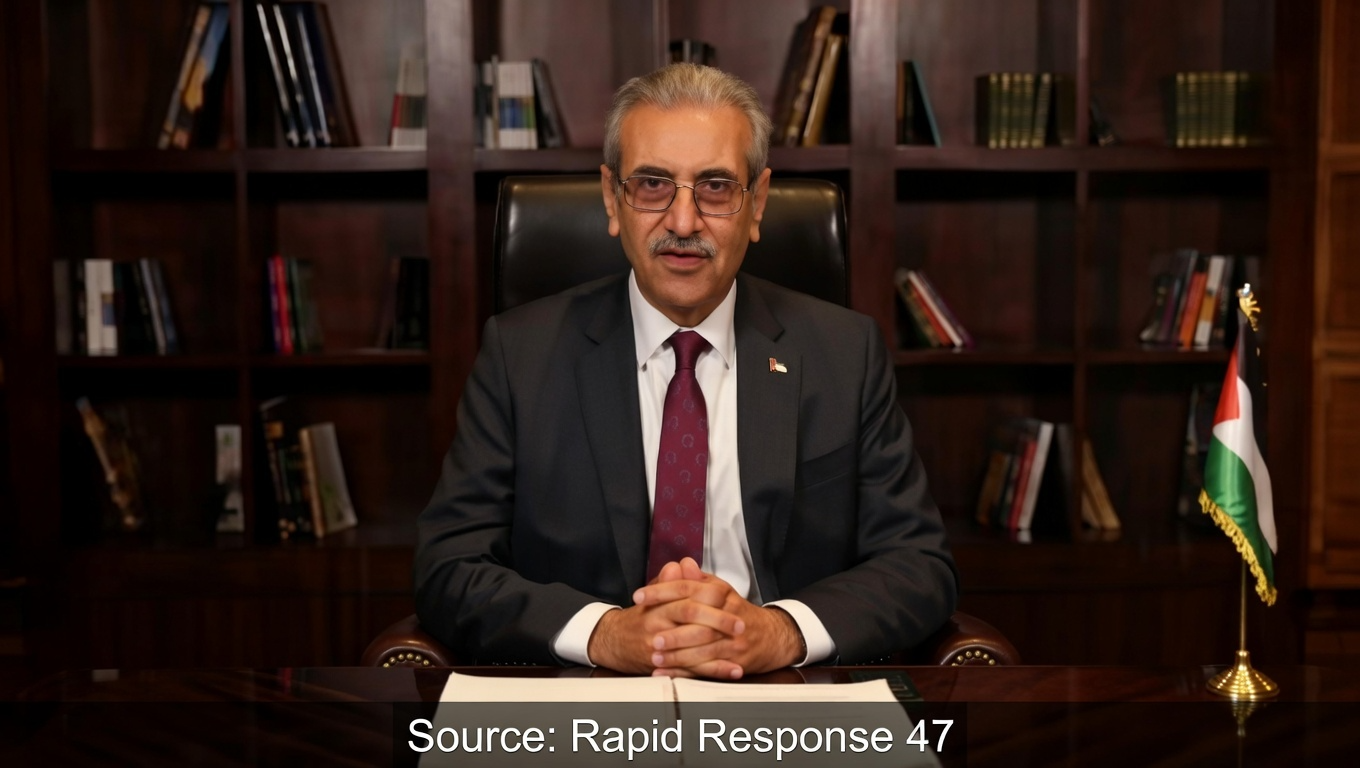
DAVOS, SWITZERLAND January 22, 2026 – In a video shared by White House Press Secretary Karoline Leavitt, Dr. Ali Sha’ath, the newly appointed head of the National Committee for the Administration of Gaza (NCAG), announced the reopening of the Rafah border crossing next week, marking a key step in President Donald Trump’s Comprehensive Plan to End the Gaza Conflict.
The announcement came during the launch of the Board of Peace at the World Economic Forum in Davos, Switzerland, on January 22, where Trump signed the charter for the new body aimed at overseeing global conflicts, starting with Gaza. Sha’ath, a former Palestinian Authority deputy minister and civil engineer from Gaza, emphasized that the crossing would open in both directions, describing it as a “lifeline” for Palestinians.
“Thank you to President Donald J. Trump and his administration for their intensive efforts to advance peace in the whole region,” Sha’ath said in the video, which was branded with White House messaging urging viewers to text “POTUS” to 45470 for updates. He also thanked mediators including Egyptian President Abdel Fattah el-Sisi, Qatar, Turkey, the Palestinian Authority, and the United Nations Security Council for supporting the plan.
The NCAG, a 15-member technocratic committee of Palestinians, was formed as part of Phase Two of Trump’s 20-point roadmap, which transitioned from a ceasefire to demilitarization, governance, and reconstruction. The ceasefire, which took effect on October 10, 2025, has largely held, though reports indicate sporadic Israeli airstrikes continue. Sha’ath outlined priorities including restoring order, rebuilding institutions, and ensuring “one authority, one law, and one weapon” in Gaza, while addressing displaced residents and infrastructure needs.
Press Secretary Leavitt promoted the video on X, stating, “Every liberal who has ever chanted ‘Free Palestine’ should watch this video… Peace and prosperity in Gaza are underway, thanks to President Trump!” The post has garnered over 400,000 views, with mixed reactions ranging from praise for the plan to accusations of overlooking ongoing humanitarian issues.
The Board of Peace, chaired by Trump, includes high-profile figures such as Secretary of State Marco Rubio, former UK Prime Minister Tony Blair, and Trump’s son-in-law Jared Kushner. While endorsed by the UN Security Council as part of the Gaza plan, some critics view the board as a potential rival to the UN, and key U.S. allies like France and Germany have declined to join.
Sha’ath’s vision includes ambitious reconstruction, such as pushing war rubble into the Mediterranean to reclaim land and rebuilding within three to seven years. However, Palestinian voices and analysts express skepticism, arguing the plan lacks a broader political framework for Palestinian statehood and risks entrenching external control.
Humanitarian groups report that over half of Gaza’s population remains displaced, with urgent needs for housing and aid. The U.S. has urged Hamas to fully disarm and return remaining hostages, warning of consequences for non-compliance.
As Phase Two progresses, the reopening of Rafah could facilitate aid inflows, but experts warn that without addressing root causes like occupation and self-determination, long-term stability remains uncertain. The Trump administration continues to position the plan as a pathway to regional prosperity, with further developments expected in the coming weeks.
About The Author