WASHINGTON D.C January 19, 2026 – Treasury Secretary Scott Bessent has publicly defended President Donald Trump’s aggressive tariff policies in a recent X post, asserting that the measures have “regained our sovereignty” and addressed key national challenges. The statement comes as the Supreme Court prepares to rule on the legality of Trump’s use of emergency powers to implement the tariffs, with a decision potentially imminent.
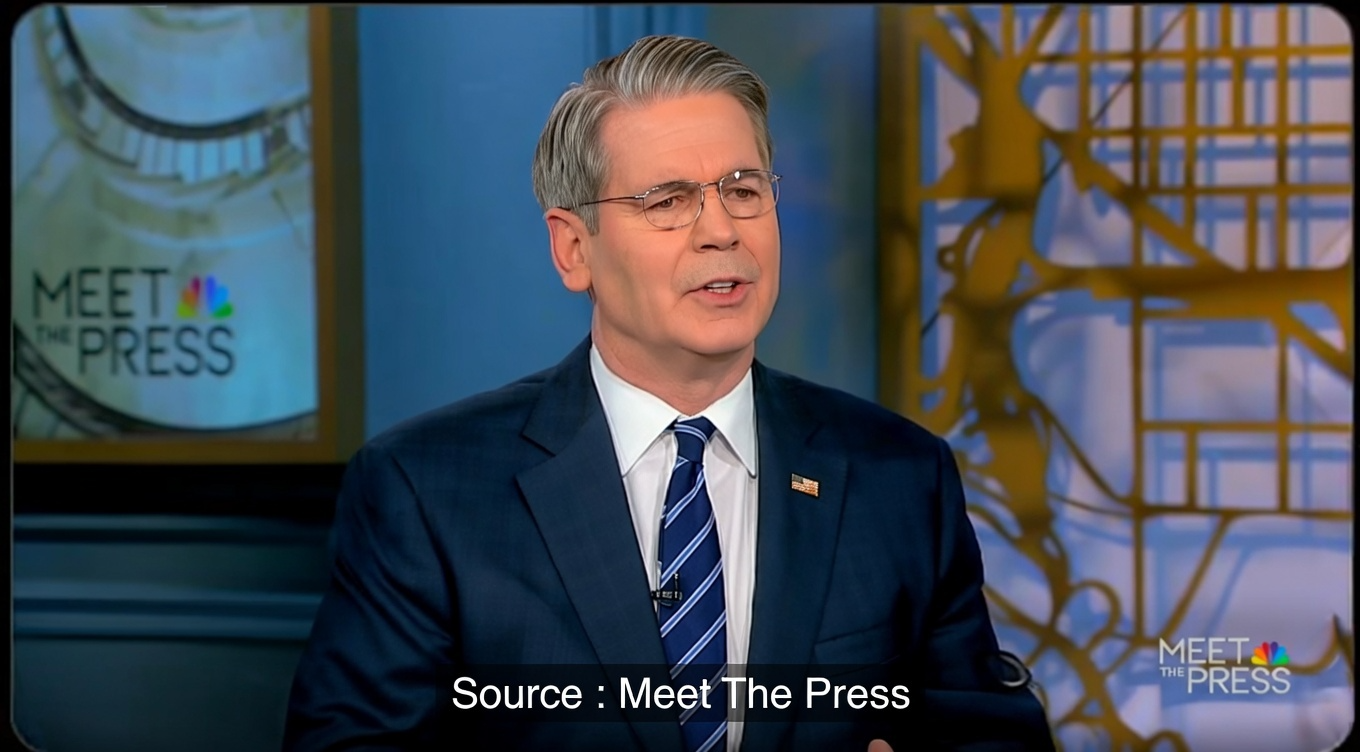
In the post, shared on January 19, Bessent wrote: “Through the strategic imposition of tariffs, @POTUS moved quickly and decisively to preemptively address numerous emergencies. He has regained our sovereignty. I believe that the Supreme Court will not want to create chaos, and that President Trump’s actions are on sound footing. His decisive efforts on behalf of the American people have addressed unfair trade imbalances, challenges in critical minerals supply chains, and fentanyl deaths.” The post included a video clip from Bessent’s appearance on NBC’s “Meet the Press,” where he elaborated on the administration’s rationale.
Bessent’s comments echo his remarks during the Sunday interview, where he described the tariffs as Trump’s “signature economic policy” and argued it is “very unlikely” the Supreme Court would overturn them. He compared the situation to the court’s decision not to strike down Obamacare, emphasizing that the justices would avoid creating economic disruption. Regarding specific tariffs on eight European countries opposing Trump’s push to acquire Greenland, Bessent framed them as a preventive measure, stating, “The national emergency is avoiding the national emergency,” and a geopolitical strategy to leverage U.S. economic power without resorting to military conflict.
The tariffs, imposed under the 1977 International Emergency Economic Powers Act (IEEPA), have been justified by the administration as responses to declared national emergencies related to trade imbalances, supply chain vulnerabilities in critical minerals, and the fentanyl crisis. They also include levies on European nations amid Trump’s renewed interest in purchasing Greenland from Denmark, which he views as a strategic asset for U.S. defense. Proponents, including Bessent, claim the policies have spurred domestic investment, reshored manufacturing, and reduced fentanyl deaths by 83% through aligned enforcement measures.
However, critics argue the tariffs represent executive overreach and impose significant costs on American consumers and businesses. Economic analyses from sources like Goldman Sachs indicate that U.S. importers bear about 80-96% of the tariff burdens, leading to higher prices and a net loss of 49,000 manufacturing jobs. Lower courts, including the Federal Circuit, have ruled against the administration’s use of IEEPA in a 7-4 decision last August, prompting the Supreme Court review. Lawsuits from companies like Costco seek refunds, potentially totaling over $100 billion, though Bessent has assured that the Treasury’s $774 billion reserves could handle such payouts if necessary.
Reactions on X to Bessent’s post were mixed. Supporters praised the tariffs as effective leverage, with one user noting they forced China to reduce export tariffs and generated $500 billion in revenue. Detractors, however, highlighted consumer costs, with comments like “Tariffs don’t punish foreign countries. They punish buyers at home” and accusations of “executive overreach that bankrupts credibility.” Economic bot accounts and users debated the impacts, citing studies showing minimal foreign absorption of costs.
Should the Supreme Court rule against the tariffs, administration officials, including U.S. Trade Representative Jamieson Greer, have indicated plans to swiftly replace them using alternative laws like the Trade Act of 1974 or the Smoot-Hawley Tariff Act of 1930, allowing for temporary levies up to 50%. Bessent remains optimistic, stating the policies have encouraged U.S. investments and strengthened national security.
The Supreme Court’s decision could come as early as today, marking a pivotal moment for presidential authority and U.S. trade policy.
About The Author