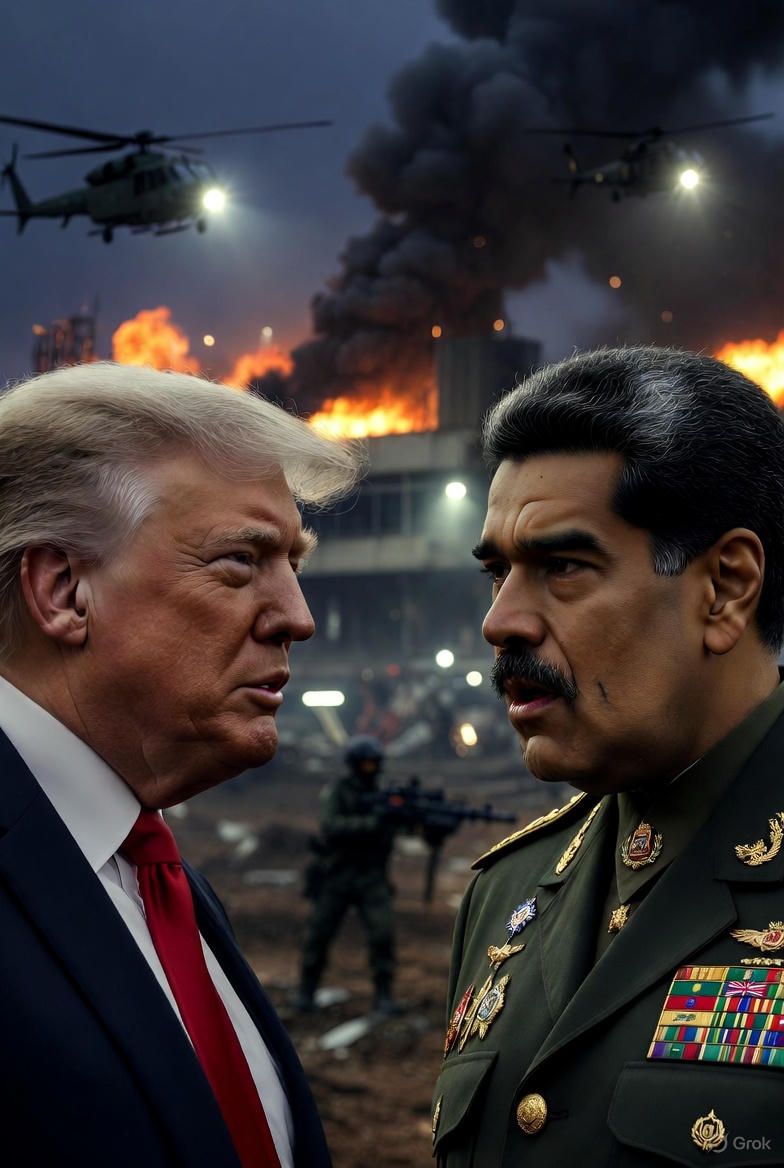
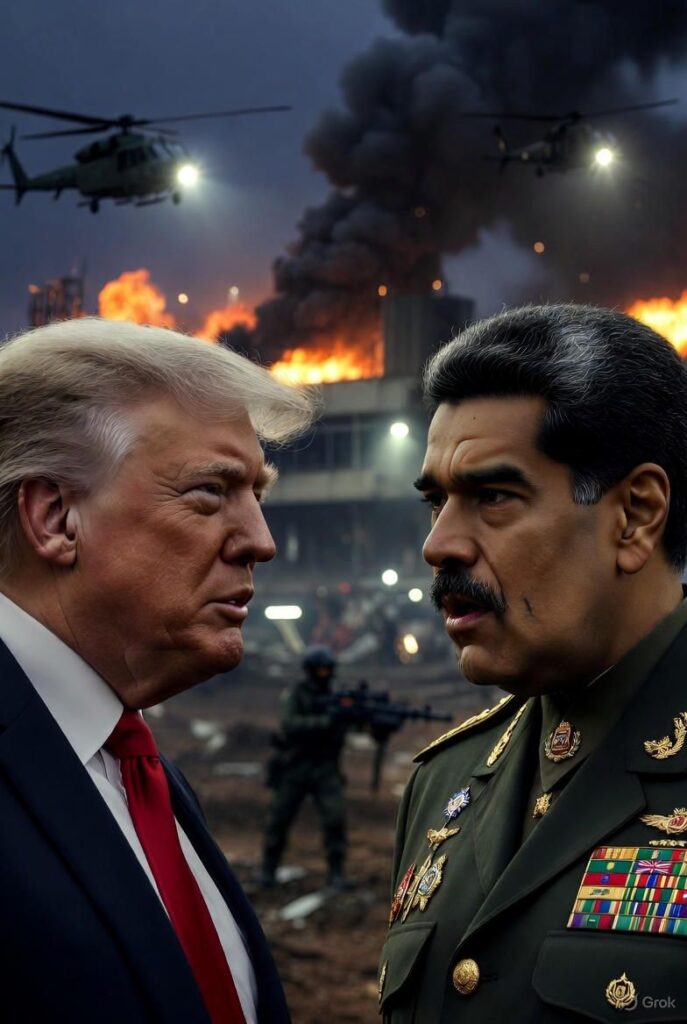
CARACAS. VENEZUELA January 3, 2026 – In the wake of multiple explosions rocking the Venezuelan capital and other regions early Saturday, the government of President Nicolás Maduro has accused the United States of launching military strikes with the explicit aim of seizing control of the country’s vast oil reserves and mineral resources. The allegations come as reports of U.S. airstrikes and helicopter operations intensify, marking a dramatic escalation in the Trump administration’s campaign against the Maduro regime.
The Venezuelan Foreign Ministry issued a statement claiming the attacks, which targeted military installations including Fort Tiuna in Caracas and bases in states like Miranda, La Guaira, and Aragua, are part of a broader U.S. strategy to exploit Venezuela’s natural wealth. “The goal of the US attack is to take possession of Venezuela’s oil and minerals,” the statement read, echoing longstanding accusations that Washington seeks regime change to access the OPEC nation’s estimated 300 billion barrels of proven oil reserves – the largest in the world. Maduro’s administration has repeatedly framed U.S. actions as “imperial aggression,” warning that such moves risk destabilizing Latin America.
Eyewitness accounts and social media footage from Caracas described at least seven explosions around 2 a.m. local time, accompanied by low-flying aircraft and power outages in southern districts. Videos circulating online showed smoke rising from sites like La Carlota airbase and the presidential Miraflores Palace, with reports of U.S. CH-47 Chinook and AH-64 Apache helicopters operating over the city. Colombian President Gustavo Petro condemned the strikes on X, posting: “At this moment they are bombing Caracas. Alert everyone — they have attacked Venezuela.”
U.S. officials have not officially confirmed the strikes, but sources told CBS News that President Donald Trump ordered attacks on Venezuelan military facilities as part of an intensified effort to curb alleged drug trafficking and migrant flows from the country. The Pentagon referred inquiries to the White House, which declined comment. This follows Trump’s recent statements threatening ground operations and his authorization of CIA activities inside Venezuela, including a reported drone strike on a port facility last month. Since late 2025, the U.S. has amassed forces in the Caribbean, intercepting vessels accused of smuggling drugs and sanctioning Venezuelan oil tankers, actions that have crippled Maduro’s primary revenue source.
The strikes represent the first acknowledged U.S. land-based military action in Venezuela under Trump, building on earlier operations against suspected narco-trafficking sites. A September 2025 strike on a drug facility caused a “massive explosion,” according to Trump, though it drew criticism for potential civilian risks. Critics, including some on X, argue the moves are less about drugs and more about ousting Maduro to secure oil interests, with one user noting, “US wants Venezuela’s oil… the world knows.” Others point to Hezbollah’s reported presence in Venezuela as a factor, though experts say this does not justify full-scale intervention.
International reactions have been swift. The Venezuelan government called for emergency meetings at the United Nations and Organization of American States, labeling the attacks a violation of sovereignty. On X, users debated the motives, with some supporting the action as a blow against cartels – “Freedom is coming” – while others decried it as reminiscent of U.S. interventions in Iraq or Libya: “We’re witnessing what we witnessed years ago with Gaddafi, Saddam.” Economic analysts warn that prolonged conflict could spike global oil prices, given Venezuela’s role in the market despite sanctions.
As of now, casualty figures remain unconfirmed, and air traffic over Venezuela has been halted. The Trump administration has maintained that its actions target criminal networks, not the Venezuelan people, but Maduro’s defiant response suggests the crisis is far from resolved. With U.S. forces reportedly poised for further operations, the region braces for potential fallout.
About The Author