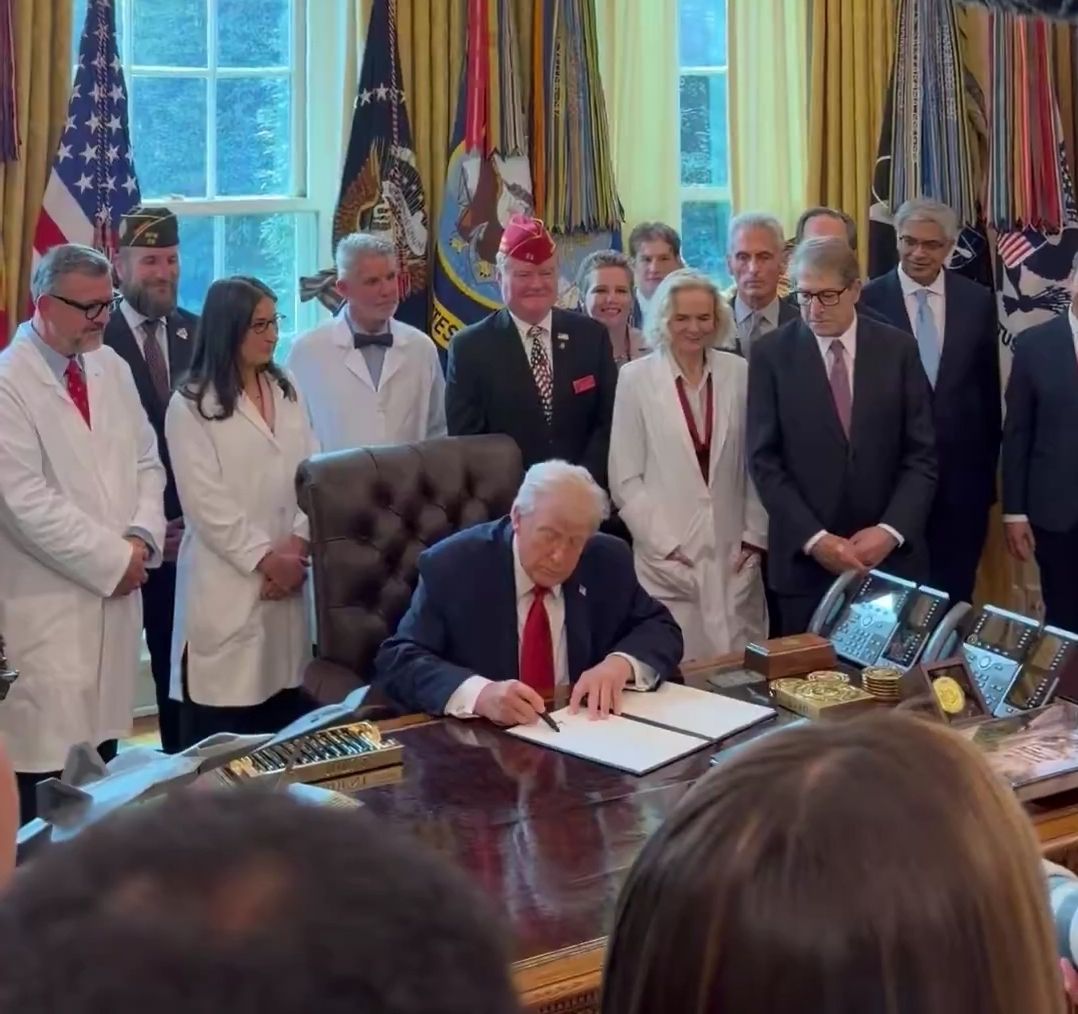
WASHINGTON, D.C. December 18, 2025 – President Donald Trump signed an executive order in the Oval Office on Thursday directing the rescheduling of marijuana from Schedule I to Schedule III under the Controlled Substances Act. The move recognizes the plant’s accepted medical uses and lower potential for abuse compared to other Schedule I drugs, marking a significant shift in federal drug policy.
Flanked by physicians in white coats, cancer patients, veterans, and law enforcement officials, Trump emphasized the order’s focus on medical applications. “The facts compel the federal government to recognize that marijuana can be legitimate in terms of medical applications when carefully administered,” the president said during the signing ceremony. He highlighted its potential as an alternative to addictive opioids for pain management.
The executive order expedites the long-proposed rescheduling process, which has been under review by the Department of Health and Human Services and the Drug Enforcement Administration. Moving marijuana to Schedule III would ease restrictions on research, expand access for medical purposes, and align federal policy more closely with scientific evidence and public opinion. A recent Gallup poll shows 68% of Americans support marijuana legalization, up from 36% in 2005.
The action does not federally legalize recreational marijuana, leaving that as a state-level issue, consistent with Trump’s previous statements. It also calls for increased research into cannabis-derived treatments and greater access to CBD products.
White House Press Secretary Karoline Leavitt announced the signing on X (formerly Twitter), sharing video of the event: “JUST NOW: President Trump signs an Executive Order to reschedule marijuana from Schedule I to Schedule III alongside doctors, cancer patients, veterans, and law enforcement.”
Supporters, including veterans and patients who shared personal stories of relief from cannabis for conditions like chronic pain and nausea, praised the order as a commonsense reform. The ceremony underscored bipartisan appeal, with advocates noting benefits for reducing opioid dependency amid the ongoing fentanyl crisis.
The rescheduling is expected to take effect following administrative procedures, potentially loosening regulations while maintaining controls appropriate for Schedule III substances like ketamine.
This marks another bold use of executive action in Trump’s second term, following recent orders on issues ranging from AI regulation to designating fentanyl as a weapon of mass destruction.
About The Author