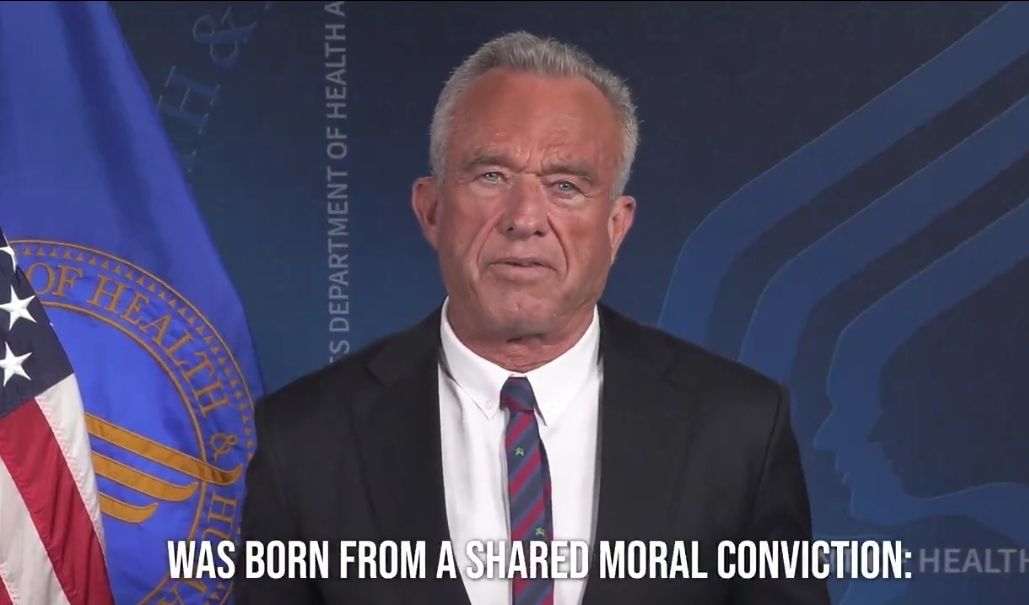
WASHINGTON, D.C. Nov 3, 2025 – In a video message delivered to international delegates at the Minamata Convention on Mercury, U.S. Health and Human Services Secretary Robert F. Kennedy Jr. announced that the United States has fully eliminated mercury-based preservatives from all vaccines and called on global health authorities to follow suit, framing the move as a critical step to protect children from what he described as a “deadly neurotoxin.”
The two-and-a-half-minute pre-recorded address, posted on X (formerly Twitter) late Monday, highlights the U.S. decision in July to remove thimerosal—a mercury-containing preservative—from the last remaining flu vaccine formulations. Kennedy, a longtime vaccine skeptic who has led Children’s Health Defense, emphasized the treaty’s historical exception for vaccines during its 2010 negotiations, calling it an “inexusable” double standard that allowed mercury in products injected into “babies, pregnant women, and the most vulnerable among us.”
“Now that America has removed mercury from all vaccines, I call on every global health authority and every party to this convention to do the same,” Kennedy said in the video, flanked by American and HHS flags. He argued that manufacturers have confirmed they can produce mercury-free single-dose vaccines without supply disruptions, adding, “There is no excuse for inaction or holding stubbornly to the status quo.”
The announcement builds on a July 23 recommendation from the CDC’s Advisory Committee on Immunization Practices (ACIP), which Kennedy’s appointees endorsed to withdraw support for thimerosal-containing flu shots. While thimerosal was phased out of most U.S. childhood vaccines in 2001 amid public concerns over autism links—concerns later debunked by extensive studies—the preservative lingered in some multi-dose influenza vials for cost and stability reasons. The HHS move affects only a small fraction of vaccines, as single-dose, thimerosal-free options have dominated the market for years.
Kennedy’s speech invoked the Minamata Convention, a 2013 U.N. treaty aimed at reducing mercury pollution worldwide, named after the Japanese city devastated by industrial mercury poisoning in the mid-20th century. He criticized the treaty for banning mercury in lamps, cosmetics, and batteries while exempting vaccines, citing hundreds of peer-reviewed studies labeling thimerosal a “potent neurotoxin, a mutagen, carcinogen, and endocrine disruptor.” The preservative’s own labeling, he noted, requires hazardous material handling and warns against ingestion.
The post, viewed nearly 700,000 times within hours, sparked a polarized response on X. Supporters, including vaccine safety advocates, praised it as a long-overdue victory. “Arrest Fauci,” one user quipped in a reposted clip, echoing calls for accountability in past public health decisions. Dr. Mary Talley Bowden, a Texas physician known for COVID-19 skepticism, questioned why mRNA vaccines remain on the market.
Critics, including medical experts, dismissed the announcement as misleading and outdated. “Mercury’s been out of childhood vaccines for decades. This is like bragging you just stopped using floppy disks,” wrote one user. Dr. Jonathan N. Stea, a Canadian clinical psychologist, highlighted Kennedy’s history of promoting debunked theories, such as linking AIDS to recreational drugs rather than HIV. Others pointed to scientific consensus: The CDC, WHO, and FDA maintain that thimerosal is safe in trace amounts and does not cause autism or other neurological harms. A 2025 Al Jazeera report noted that during Kennedy’s first ACIP meeting in June, the panel voted to halt routine thimerosal use despite “no evidence of harm.”
Public health advocates expressed concern that the rhetoric could erode vaccine confidence at a time when flu season approaches and global measles outbreaks persist. “Thimerosal is almost never used in vaccines anymore, but vaccine skeptics have falsely claimed it carries health risks to the brain,” tweeted one opponent, linking to a University of Nebraska expert analysis. Kennedy has faced similar backlash for demanding the retraction of a Danish study exonerating aluminum in vaccines from autism risks.
The WHO estimates that thimerosal remains in some multi-dose vials distributed in low-income countries for cost reasons, where refrigeration challenges make preservatives essential. Kennedy’s call aligns with his “Make America Healthy Again” agenda, but experts like those at BioPharma Dive warn it elevates “unproven fears” without addressing broader access issues.
HHS did not immediately respond to requests for comment on potential international follow-up. As the Minamata Convention’s next meeting looms, Kennedy’s message underscores a growing transatlantic divide on vaccine ingredients, with the U.S. leveraging its market power to push for stricter global standards.
About The Author