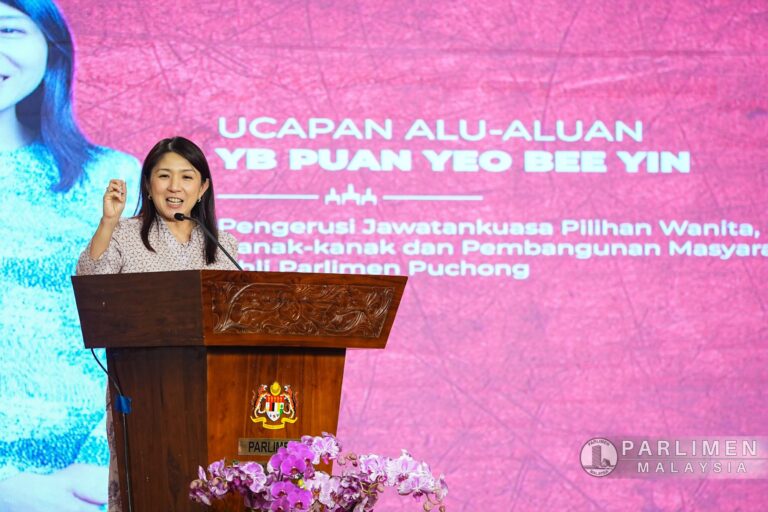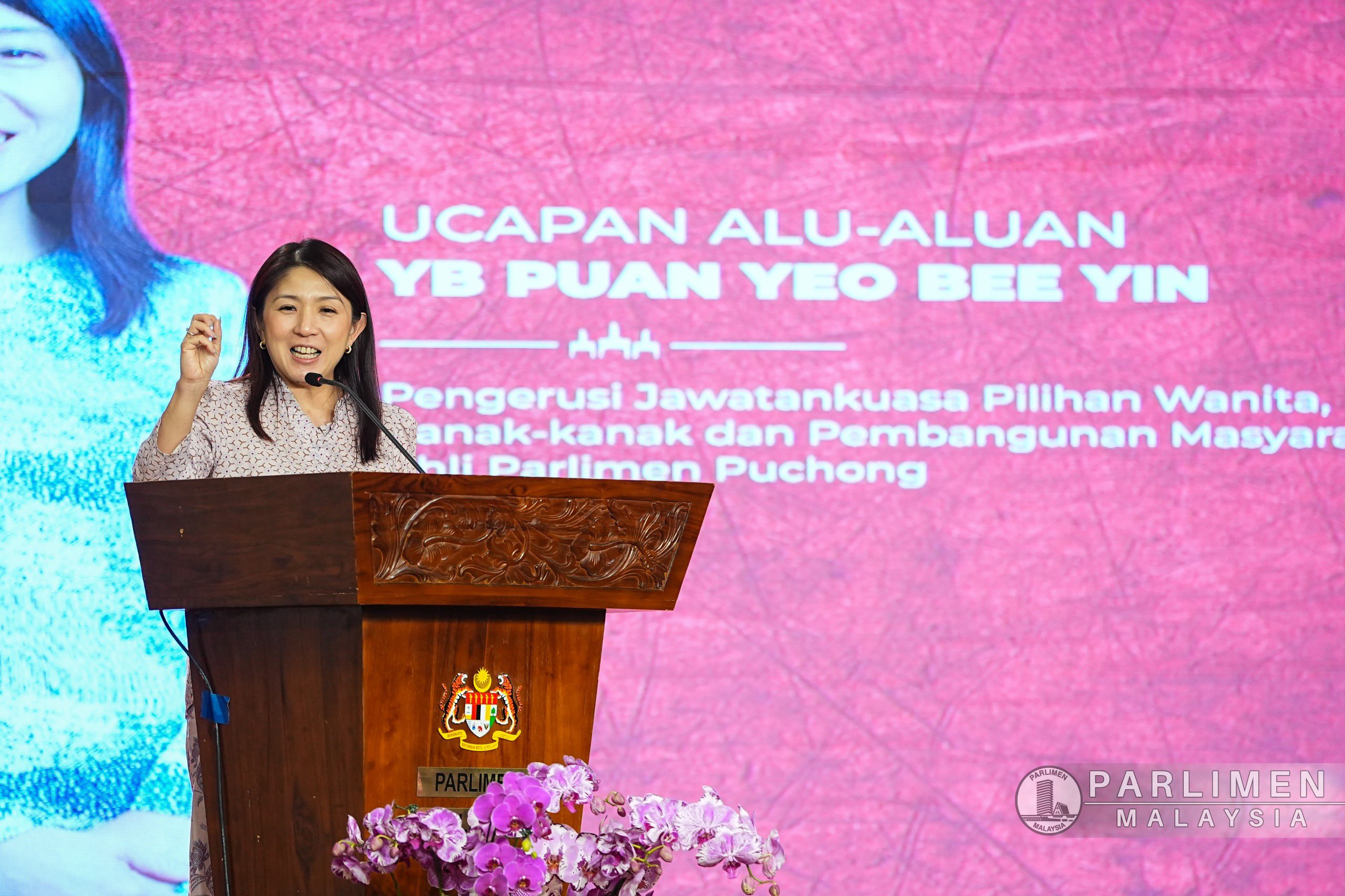
PUCHONG, SELANGOR, MALAYSIA March 4, 2026 – Yeo Bee Yin, the Member of Parliament for Puchong, has voiced strong concerns over the handling of investigations into Malaysia’s RM1.1 billion (approximately US$270 million) collaboration agreement with British semiconductor giant ARM Holdings, calling for a return to principled politics and fair treatment of individuals involved.
In a recent statement, Yeo expressed her disagreement with aspects of the ARM deal during parliamentary proceedings, focusing on policy and strategic implications, and urged the government to reconsider elements of it. However, she firmly rejected suggestions that former Economy Minister Rafizi Ramli or his team personally profited from the arrangement.
“To equate the ARM deal with 1MDB is like a ‘cerita dongeng’—a fairy tale that no rational person could believe,” Yeo wrote, dismissing corruption allegations as baseless.
Her comments come amid an ongoing probe by the Malaysian Anti-Corruption Commission (MACC) into the deal, signed in March 2025, which grants Malaysia access to ARM’s advanced chip design intellectual property over a 10-year period to bolster the country’s semiconductor ambitions, including AI chip development and establishing ARM’s first Southeast Asian office in Kuala Lumpur. Rafizi has repeatedly defended the agreement, noting it underwent Cabinet scrutiny multiple times across involved ministries (Economy, Investment, Trade and Industry, and Finance), and denied any rushed or improper processes.
Yeo highlighted the public pursuit of James Chai (also known as Chai Jin Shern), Rafizi’s former special functions officer at the Economy Ministry, who has been named a wanted person by MACC to assist in the investigation. Chai, who briefly assisted ARM post-resignation for transition purposes before leaving, has denied any wrongdoing, rejected comparisons to fugitive financier Jho Low, and criticized the probe as politically motivated.
Describing Chai as a “young, well-educated, and idealistic Malaysian,” Yeo condemned what she sees as unfair humiliation through state mechanisms, regardless of political affiliations.
“No citizen of this country should be treated unfairly, regardless of which side of the political aisle they stand on,” she emphasized.
Yeo posed a reflective question: “Have we morphed into the very government we once despised and fought against?” She expressed hope for a renewed Malaysian politics that avoids such pitfalls and positions the nation as a positive example globally.
Quoting from Chai’s own poignant reflection—likely from a public article or statement—she underscored the enduring value of public service:
“My only crime is that I held on to an idealism even into my early 30s when most people would have abandoned it by then. But I know that the fight against injustice must continue, however inconvenient and tiring. I know I could have taken a different path, but I will never regret serving my nation because serving Malaysia remains the greatest honour of my life. No oppression will change that.”
Yeo concluded by urging young, idealistic Malaysians not to lose faith in the country, affirming that “we can and should do better than this” to cultivate a brighter future.
The ARM deal remains a flashpoint in discussions on Malaysia’s push to advance from assembly and testing in semiconductors to higher-value design and innovation, even as the MACC investigation continues with statements recorded from various parties, including Rafizi.
About The Author