WASHINGTON, D.C. January 12, 2026
(Life News Agency) – The White House on Monday shared a social media post highlighting the “No Tax on Tips” policy, emphasizing its benefits for tipped workers under President Donald Trump’s recent tax reforms.
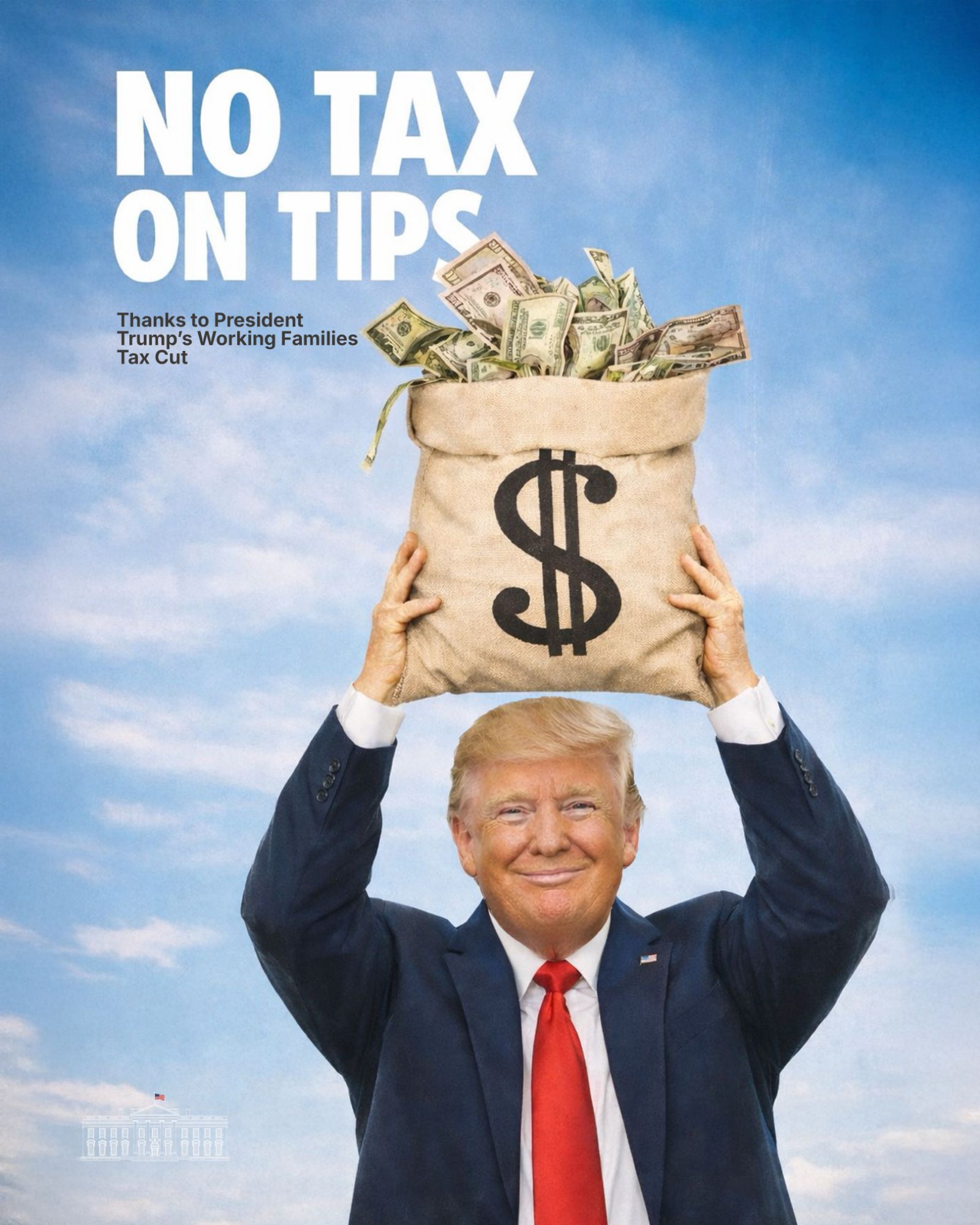
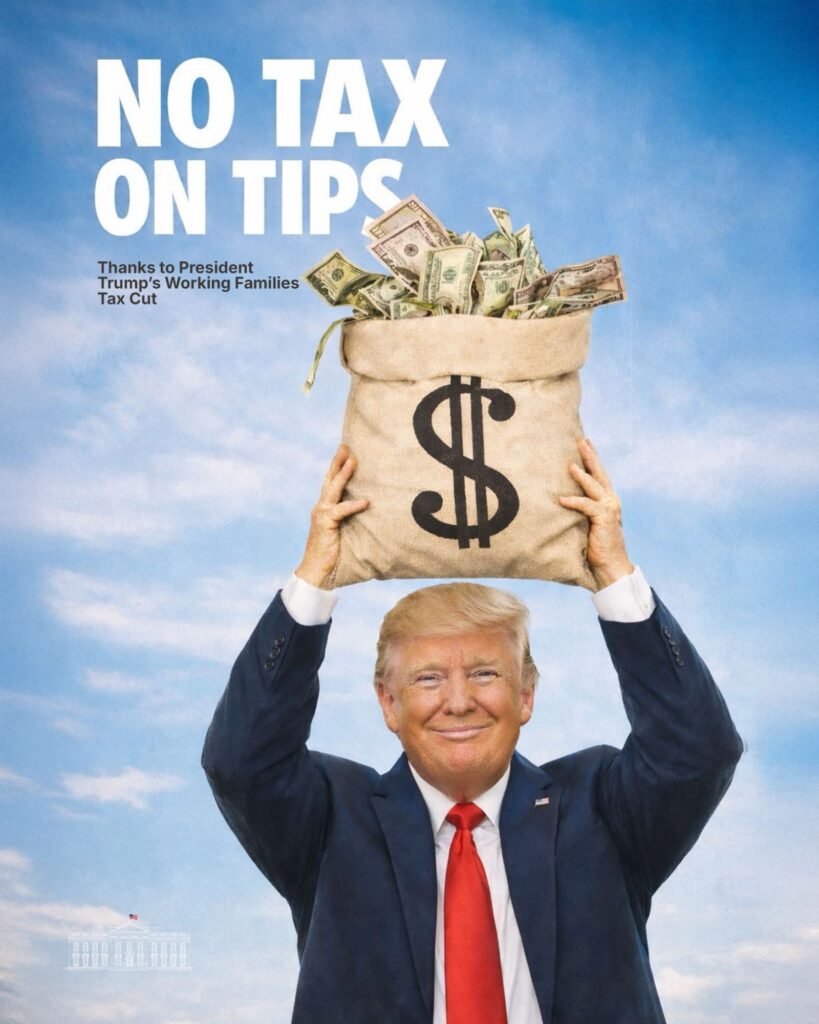
The post on X (formerly Twitter), captioned “More money in YOUR pocket. Just a reminder. 💸💰”, featured a graphic image of President Trump holding a large sack of money overflowing with dollar bills. Bold text on the image read “NO TAX ON TIPS” with smaller lettering stating “Thanks to President Trump’s Working Families Tax Cut.” The background included a clear blue sky and a faint image of the White House.
The reminder comes as Americans begin preparing their 2025 tax returns, which will be filed starting in early 2026. The policy allows eligible workers to claim a federal income tax deduction of up to $25,000 annually on qualified tips received in 2025.
This provision is part of the “One Big Beautiful Bill” (also referred to as the Working Families Tax Cut), signed into law by President Trump on July 4, 2025.
Key details of the “No Tax on Tips” deduction:
– Cap : Up to $25,000 per year in qualified tips (cash or charged tips from customers, including shared tips).
– Eligibility : Available to employees and self-employed individuals in traditionally tipped occupations; requires a valid Social Security number.
– Duration : Applies to tax years 2025 through 2028, after which it expires unless extended by Congress.
– Limitations : Tips remain subject to payroll taxes (Social Security and Medicare), and the deduction phases out for higher-income taxpayers.
The White House post quickly gained traction, amassing over 5,800 likes and 205,000 views within hours of publication. Responses were mixed, with supporters praising the relief for service industry workers and critics noting the $25,000 cap and temporary nature of the provision.
The IRS has issued guidance to help taxpayers claim the deduction, including a list of eligible tipped jobs.
Workers are advised to consult tax professionals or official IRS resources for personalized advice.
This policy fulfills a key campaign promise from President Trump, aimed at putting more earnings directly into the pockets of hardworking Americans in the hospitality and service sectors.
About The Author