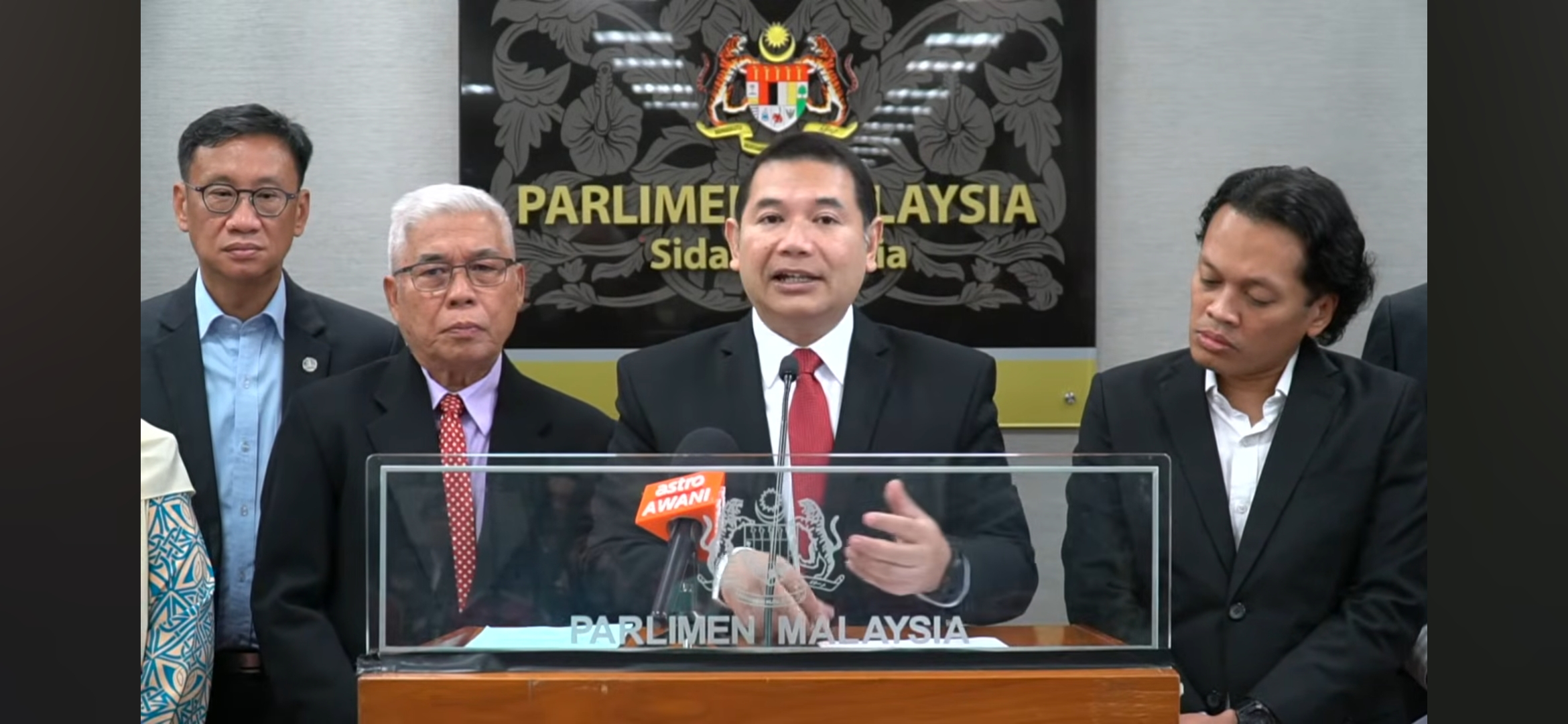
KUALA LUMPUR, MALAYSIA February 24, 2026 – A group of 10 government MPs from PKR today threw their support behind the Constitution (Amendment) (No. 2) Bill 2026 that seeks to separate the roles of Attorney General (AG) and Public Prosecutor (Pendakwa Raya), but warned that the current draft risks concentrating too much power and urged deeper parliamentary involvement to strengthen checks and balances.
The statement, signed by Pandan MP Datuk Seri Rafizi Ramli and nine other MPs including Subang’s Wong Chen, Ampang’s Rodziah Ismail, Setiawangsa’s Nik Nazmi Nik Ahmad, Petaling Jaya’s Lee Chean Chung, Sg Siput’s S Kesavan, Wangsa Maju’s Zahir Hassan, Balik Pulau’s Bakhtiar Wan Chik, Batu Pahat’s Onn Abu Bakar and Pasir Gudang’s Hassan Karim, was issued hours after the bill completed its first reading in the Dewan Rakyat yesterday.
The bill, tabled by Minister in the Prime Minister’s Department (Law and Institutional Reform) Datuk Seri Azalina Othman Said, proposes creating an independent Public Prosecutor position appointed by the Yang di-Pertuan Agong on the recommendation of the Judicial and Legal Service Commission (after consultation with the Conference of Rulers). The appointee must be a citizen with at least 10 years’ litigation experience and will serve a fixed seven-year term, removable only through a tribunal process for incapacity or misconduct. The AG will retain advisory and civil functions but lose criminal prosecution powers.
While welcoming the long-awaited reform — a key pledge under the Madani government to insulate prosecutions from political interference — the MPs highlighted risks exposed by past controversies, particularly during the 1MDB scandal when Parliament and the public had no direct mechanism to act against the then-AG who also held prosecutorial powers.
“Even if the people vote to change the government and MPs, a Public Prosecutor could remain in office if he maintains good relations with the Prime Minister and the Judicial and Legal Service Commission,” the statement read.
The MPs aligned themselves with yesterday’s joint position by civil society groups BERSIH, C4 Center, IDEAS, Projek SAMA, Rasuah Busters, IKRAM Malaysia and ABIM, which called for layered, transparent processes involving Parliament.
Their key demands:
1. Refer the bill immediately to the Special Select Committee on Human Rights, Elections and Institutional Reform (chaired by Selayang MP William Leong) for cross-party scrutiny and public feedback.
2. Introduce parliamentary confirmation hearings for the Public Prosecutor nominee at the Special Select Committee level, followed by a simple-majority vote in the Dewan Rakyat before the Yang di-Pertuan Agong’s formal appointment.
3. Give the Dewan Rakyat power to initiate removal proceedings via a two-thirds majority motion, triggering the tribunal process.
4. Shorten the term from seven to four years to prevent any single appointee from wielding outsized influence across multiple administrations.
The group stressed that their support for the bill — which requires a two-thirds majority (148 out of 222 seats) when put to a vote on Tuesday, March 3 — is conditional on the government accepting these enhancements.
“We are responsible for conveying the aspirations of progressive voters who want layered processes to prevent power over appointments and dismissals from being concentrated among just a few individuals,” they said.
The full media statement is available via Rafizi Ramli’s official X account.
This development marks the latest push in Malaysia’s institutional reform agenda under Prime Minister Datuk Seri Anwar Ibrahim, following earlier amendments limiting the Prime Minister’s term. Critics and reformers alike are watching closely whether the government will accommodate the calls for greater transparency before next week’s crucial division.
About The Author