By Emeritus Professor Ng Kwan Hoong
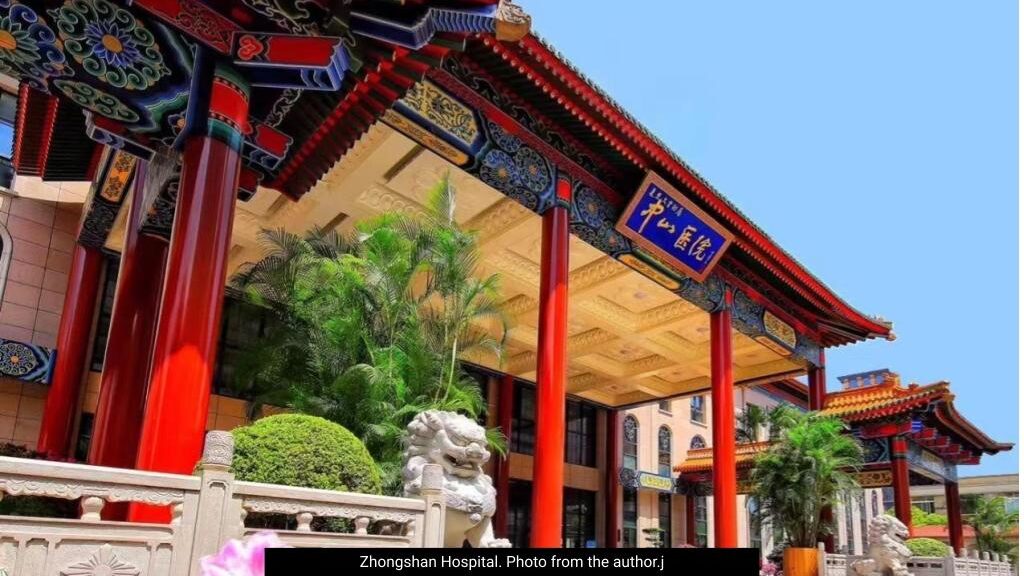
The revolving doors of Zhongshan Hospital opened and closed in a steady rhythm. Doctors moved briskly through corridors. Nurses guided patients with quiet efficiency. Visitors queued patiently at registration counters, clutching smartphones with appointment codes. The scale of movement was remarkable, yet there was no sense of chaos.
Located in the heart of Shanghai, the hospital serves millions each year. Its reputation extends well beyond the city, drawing patients from across China. Advanced imaging suites, digital tracking systems and highly specialised departments reflect a level of medical sophistication that matches the ambition of the metropolis itself. Screens display real-time data. Elevators arrive without delay. Processes are mapped with precision.
From a professional standpoint, there was much to admire. The integration of departments, the smooth coordination between clinical teams and the careful design of patient flow all spoke of deliberate planning. It was modern, intelligent healthcare operating at scale, disciplined and intentional.
But a hospital is not merely an architectural achievement or a showcase of advanced technology. It is, at its core, a place where vulnerability is revealed.
As we walked through the corridors, I noticed a young man gently supporting an older woman. She leaned lightly on his arm, taking careful steps as he adjusted his pace to match hers. He did not rush, even though others moved swiftly around them. In another corner, an older woman lowered a young girl into a wheelchair with quiet reassurance, brushing a strand of hair from her face before pushing her forward.
These were not dramatic scenes. They unfolded without announcement. Yet they carried a weight that no machine could replicate.
Hospitals are spaces where people arrive at their most fragile. Illness strips away certainty. Anxiety replaces routine. Even the most accomplished individuals become simply patients, waiting to be examined, treated or comforted. In such moments, technology plays a crucial role, but it is dignity that sustains hope.
I paused for a moment near a waiting area where families sat in attentive silence. Some were scrolling through their phones, others speaking softly. A child rested her head against her father’s shoulder. An older man stared quietly at the floor, perhaps lost in thought. The atmosphere was serious, but not harsh. There was an undercurrent of shared understanding, as though everyone recognised that they were navigating uncertainty together.
The hospital’s operations were undeniably impressive. Appointments were managed efficiently. Information flowed smoothly between departments. Public spaces were designed to accommodate large numbers without overwhelming them. Even the physical environment, bright yet not glaring, seemed designed to reduce stress.
Yet what stayed with me was not the precision of the logistics. It was the human rhythm beneath it.
Shanghai is often described through its skyline. Towering buildings rise confidently above the Huangpu River, symbols of economic vitality and global financial stature. In an earlier reflection, I wrote about measuring the city beyond its skyline, at street level, where ordinary life unfolds. This visit reminded me that hospitals, too, must be measured beyond their technology.
A nurse paused to listen attentively to an older patient who struggled to articulate his symptoms. She did not interrupt. She leaned slightly forward, maintaining eye contact. A family member waited patiently outside an imaging suite, hands clasped, offering quiet encouragement to a loved one about to enter. A young intern guided an anxious visitor toward the correct department, taking the time to explain rather than merely pointing the way.
These gestures are small. They do not appear in annual reports or performance dashboards. Yet they form the very fabric of trust.
Modern medicine depends on innovation. Imaging technologies allow us to see what was once hidden. Data systems improve accuracy and speed. Research expands possibilities for treatment. These are extraordinary achievements. But their ultimate value lies in how they serve the person lying on the examination bed, uncertain and hopeful at the same time.
In the corridors of Zhongshan Hospital, I sensed a deliberate balance. Efficiency was present, but not at the expense of compassion. Movement was swift, yet conversations were not hurried. The environment conveyed seriousness without intimidation. The institution felt large, but not impersonal.
Healing does not occur only through procedures or prescriptions. It unfolds through reassurance, clarity and trust. It requires systems that function well, but also hands that are steady and voices that are calm. A hospital may be built with concrete and glass, but it is sustained by patience and loving care.
As we concluded our visit and stepped back into the city’s vibrant streets, the contrast was subtle but meaningful. Outside, Shanghai pulsed with speed and style. Inside the hospital, the tempo was different. Urgent, yes, but guided by attentiveness rather than spectacle.
It reminded me that progress, whether in a city or in medicine, cannot be measured solely by scale or efficiency. True advancement reveals itself in how well we protect the vulnerable and uphold human dignity.
In the end, what defines a great hospital is not the sophistication of its equipment, but the quiet assurance it offers to those who enter uncertain and anxious. In that assurance, technology finds its purpose.
And in the gentle movement of a wheelchair down a bright corridor, I was reminded that healing, even in the heart of a megacity, still happens at a profoundly human pace.

The author is an Emeritus Professor of Biomedical Imaging at the Faculty of Medicine, Universiti Malaya.
About The Author