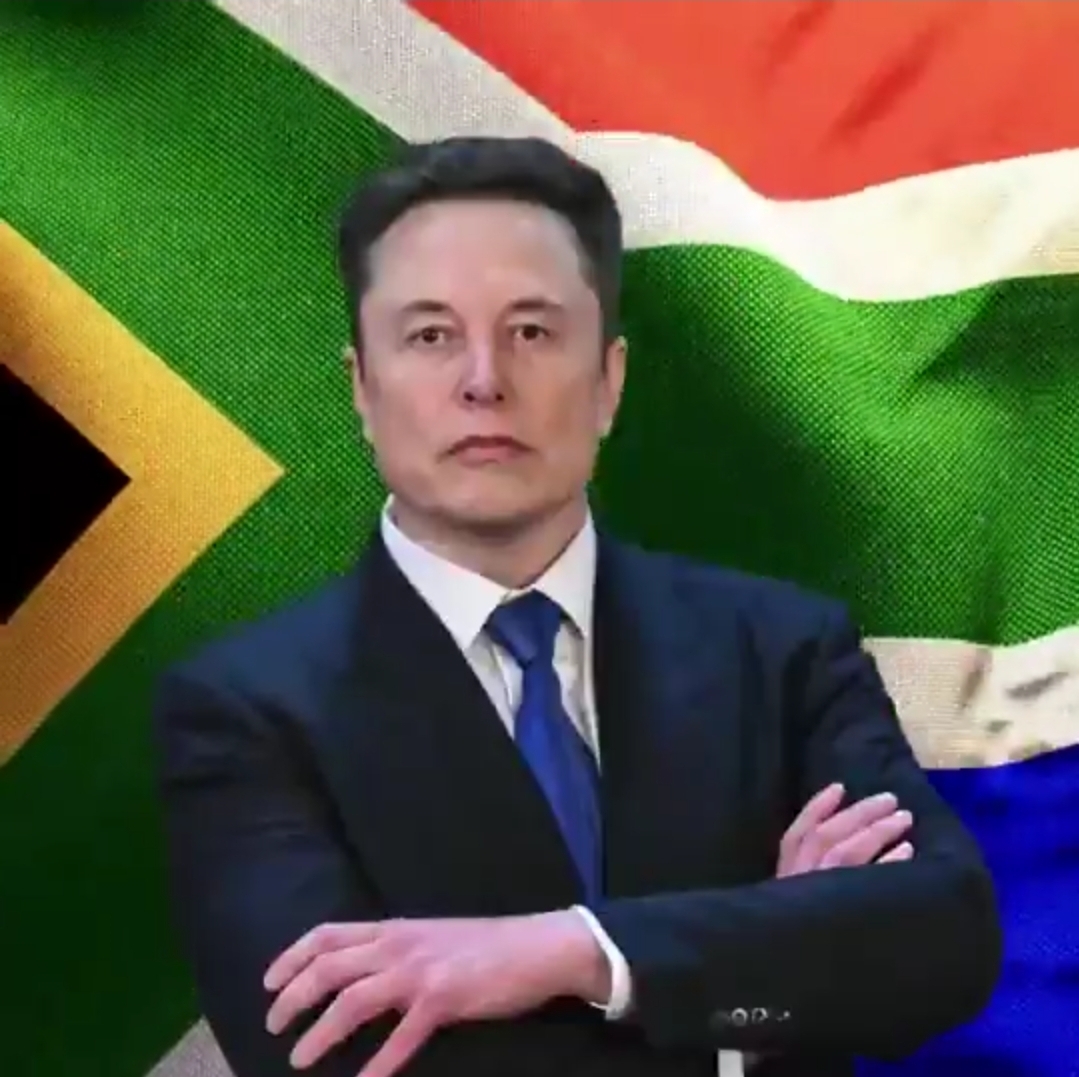
WASHINGTON D.C April 12, 2026 — Elon Musk, the South Africa-born CEO of SpaceX and Starlink, has launched a scathing attack on the South African government, claiming it is denying his satellite internet service a license purely on racial grounds.
In a post on X (formerly Twitter) today, Musk wrote: “South Africa won’t allow Starlink to be licensed, even though I was BORN THERE, simply because I am not Black!”
He added that his company was repeatedly offered the chance to secure approval through what he described as bribery — by “pretending that a Black guy runs Starlink SA” — but refused on principle.
“Racism should not be rewarded no matter to which race it is applied,” Musk stated. “Shame on the racist politicians in South Africa. They should be shown no respect whatsoever anywhere in the world and shunned for being unashamedly RACISTS!”
The comments were made in response to a detailed thread by @cb_doge explaining South Africa’s Broad-Based Black Economic Empowerment (B-BBEE) rules. These policies, introduced after the end of apartheid, require companies in sectors such as telecommunications to allocate at least 30% ownership to historically disadvantaged groups — primarily Black South Africans — to address past economic inequalities.
The thread highlighted Starlink’s offer to invest around R500 million (approximately $30 million) to provide free high-speed internet to 5,000 rural schools, potentially benefiting more than 2.4 million children annually. Starlink already operates in about 24 other African countries, where it has delivered connectivity to remote villages for education, healthcare, and business.
Musk, who left South Africa as a teenager, was born in Pretoria in 1971. He has long criticised the B-BBEE framework as discriminatory, arguing it prevents fair competition and harms the very communities it aims to help by delaying access to modern technology.
The dispute has reignited debate online. Supporters of Musk’s position praised his refusal to engage in what they called “fronting” or race-based ownership requirements, while others defended the policies as necessary redress for apartheid-era disadvantages and said foreign firms must comply with local laws.
Starlink remains unlicensed in South Africa despite earlier government moves in 2025 to allow “Equity Equivalent Investments” — such as infrastructure or skills projects — as alternatives to direct equity sales. The company has previously offered substantial community investments, but no licence has been granted as of April 2026.
The Independent Communications Authority of South Africa (ICASA) has not issued an immediate response to Musk’s latest remarks.
The development comes amid growing global scrutiny of South Africa’s economic transformation policies and their impact on foreign investment in critical technologies like satellite broadband.
About The Author