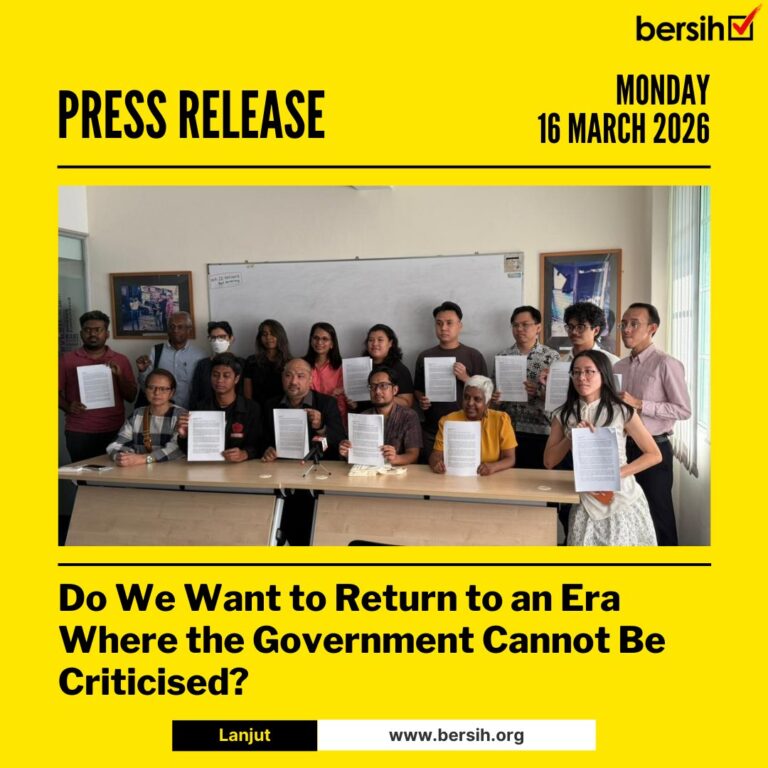
KUALA LUMPUR, MALAYSIA March 16, 2026– A coalition of Malaysian civil society organizations and individuals has issued a scathing joint press release condemning the Royal Malaysia Police (PDRM) and the Madani Government for launching investigations into activists, academics, and researchers under Section 124B of the Penal Code. The group argues that these actions represent a deliberate effort to intimidate critics and erode freedom of expression, harking back to an era where government accountability was off-limits.
The press release, released today by the Coalition for Clean and Fair Elections (BERSIH) and endorsed by undersigned parties, questions the rationale behind probing individuals for alleged “activities detrimental to parliamentary democracy.” It highlights summonses issued to representatives from the Center to Combat Corruption and Cronyism (C4 Center), BERSIH itself, and academics such as Associate Professor Dr. Syaza Syukri from the International Islamic University Malaysia (IIUM), Dr. Mazlan Ali from Universiti Teknologi Malaysia (UTM), and Aziff Azuddin from IMAN Research. According to the statement, at least 14 individuals have already been questioned, with more expected to follow.
“We are of the view that this action clearly constitutes a form of intimidation and a serious attempt to silence the voices of citizens from criticising the government lawfully and based on facts,” the release states. It details how interrogations involved around 80 questions probing criticisms of the government, funding sources, and alleged links to efforts to “topple the Prime Minister.” The group expresses alarm over PDRM’s March 13 statement suggesting key witnesses are abroad, implying they might be evading authorities—a narrative they see as manipulative.
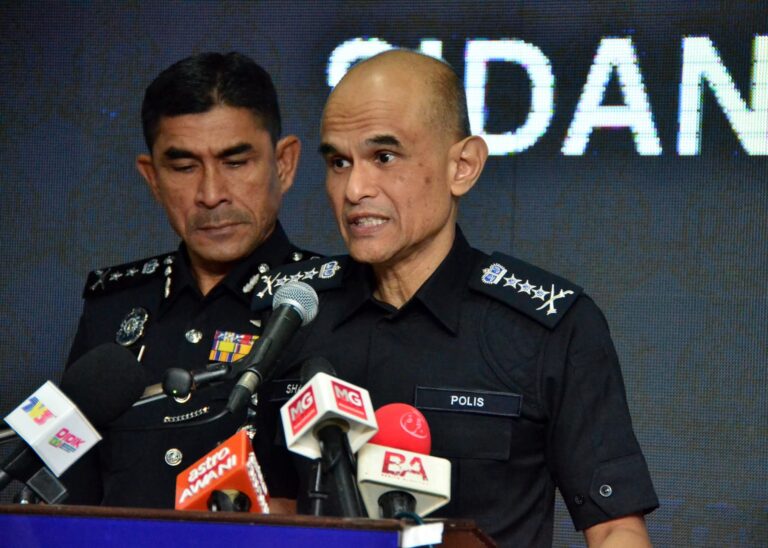
The investigations stem from late February reports of an alleged conspiracy to overthrow the government and undermine national stability. Inspector-General of Police Tan Sri Mohd Khalid Ismail confirmed the probe under Section 124B, which carries a maximum penalty of 20 years’ imprisonment for actions deemed harmful to parliamentary democracy. Home Minister Datuk Seri Saifuddin Nasution Ismail has emphasized prioritizing such complaints, stating that the Cabinet directed PDRM to act swiftly on any reports of destabilization attempts. Allegations reportedly involve influential figures, including a tycoon’s wife and an international media agency, though details remain sparse.
Critics argue the broad application of Section 124B risks criminalizing legitimate discourse. In the press release, signatories warn that framing criticism—particularly of institutions like the Malaysian Anti-Corruption Commission (MACC)—as a threat to the state undermines democratic principles enshrined in Article 10 of the Federal Constitution, which protects freedom of expression.
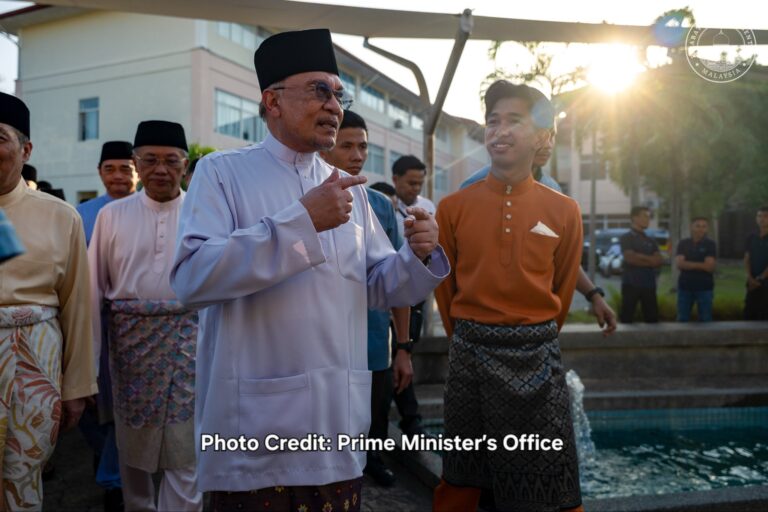
The statement draws a pointed comparison to Prime Minister Dato’ Seri Anwar Ibrahim’s past as a vocal government critic, accusing the Madani administration of hypocrisy for employing tactics once used against him, such as labeling opponents as foreign agents. “Is this not the greatest form of hypocrisy?” it asks.
Reactions on social media echo these concerns. Associate Professor Dr. Syaza Syukri shared statements from IIUM’s Academic Staff Association and Political Science Students Association defending academic freedom. Journalist Boo Su-Lyn lambasted the probes, arguing Section 124B should target grave threats like armed insurrections, not opinions, and accused Pakatan Harapan of making a “mockery of the criminal justice system.” The Centre for Independent Journalism (CIJ) decried the questioning of C4 Center CEO Pushpan Murugiah as an infringement on civil society’s role in accountability. DAP’s Sangeet Kaur labeled the investigations “vague” and alarming if based solely on public work.
Historical parallels were also invoked, with users recalling 2015 arrests under the same section of activists like Adam Adli and Hishammudin Rais. One legal commentator deemed Section 124B itself “void” for its vagueness.
The coalition demands an immediate halt to the intimidations, full transparency on the probes’ scope, and safeguards against weaponizing enforcement agencies. “This is the time for Malaysia to move forward by reforming enforcement institutions so that they protect the people—not turn their powers against citizens who speak out,” the release concludes.
Government spokespersons have described the matter as “serious” but deferred to PDRM for details, urging the public to avoid speculation. As of now, no charges have been filed, but the escalating scrutiny on civil society raises questions about the balance between national security and democratic freedoms in Anwar’s administration.
About The Author