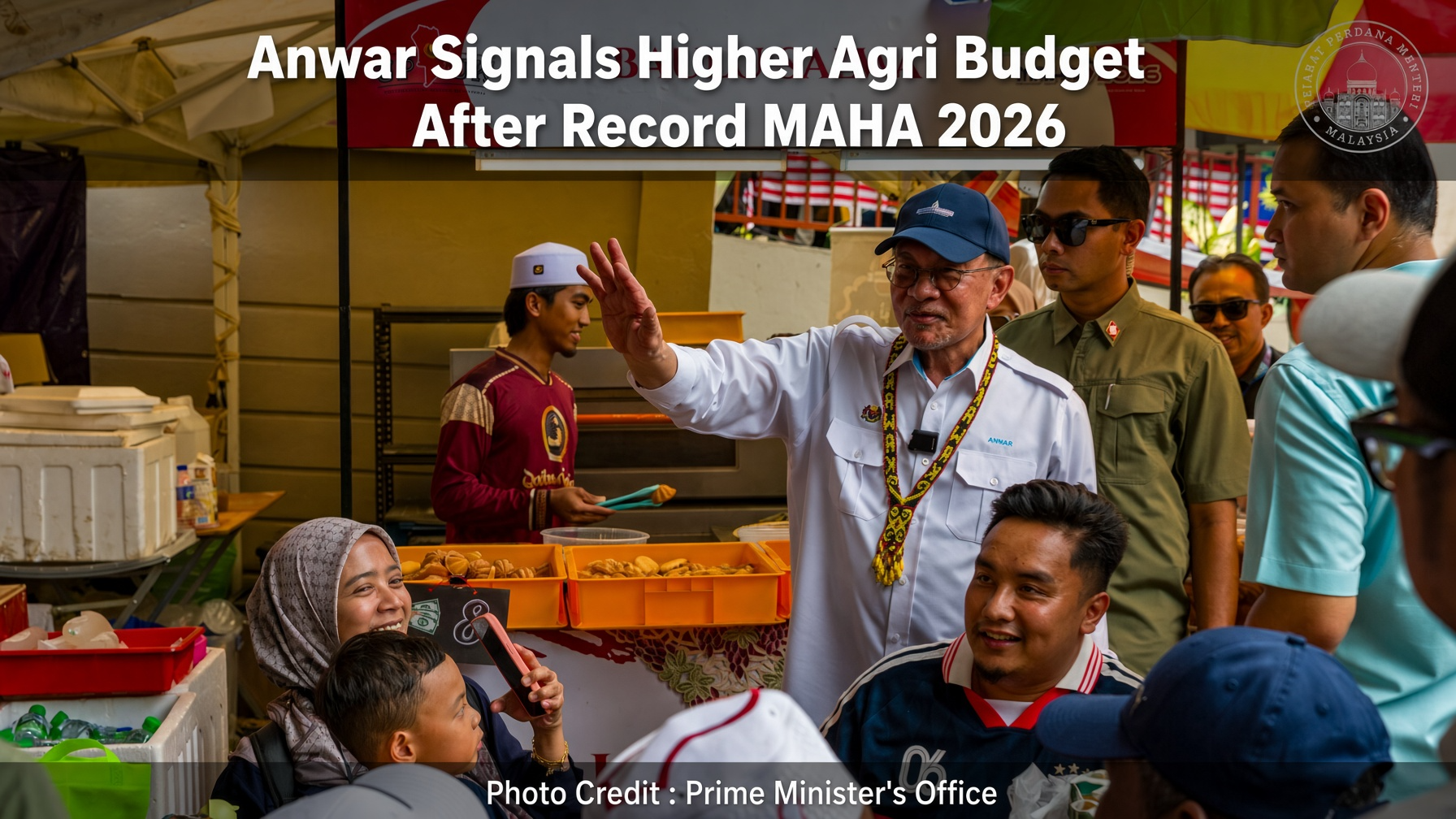
KUALA LUMPUR Sept 6, 2026 – Prime Minister Datuk Seri Anwar Ibrahim closed the 14th Malaysia Agriculture, Horticulture and Agrotourism Exhibition (MAHA 2026) by declaring agriculture a lasting national pillar and signalling higher Budget 2027 allocations for farmers, provided every ringgit is spent with strict accountability.
The 10-day event at MAEPS Serdang, which ran from 28 August to 6 September, drew more than 4.3 million visitors—including 1.7 million youths—and generated RM66.88 million in sales, both figures beating official targets. Memoranda of understanding signed during the exhibition pointed to potential investments of RM10.3 billion to RM12.6 billion.
Speaking after touring booths and meeting farmers, planters, fishermen and ministry officials, Anwar said the enthusiastic turnout proved the sector remains vital even as Malaysia pursues artificial intelligence, digital transformation and the energy transition. “We must dare to reach for the sky, yet stay rooted to the earth,” he posted.
He pointed to rising pineapple exports and expanding local onion production as evidence that technology is already lifting output and opening markets. The MADANI government, he added, will give agriculture priority in the coming national budget and is prepared to raise the Agriculture and Food Security Ministry’s allocation so that extra funds reach padi growers, smallholders and fishermen directly.
That extra money, Anwar warned, must be accompanied by tighter governance. Leakages or abuse ultimately punish the very communities the spending is meant to help. He cited FELDA as a cautionary example: the agency now requires nearly RM1 billion a year from the federal government to service debts caused by earlier mismanagement, not by the settlers who cleared the land. “I am not willing to place that burden on the shoulders of the pioneers,” he said. Further details on FELDA-related issues would be disclosed in coming weeks, he added.
Anwar closed by thanking organisers and participants and insisting that every deal struck at MAHA must be followed through so the benefits actually reach rural communities. “Amanah and accountability must continue after the curtains fall,” he wrote.
About The Author