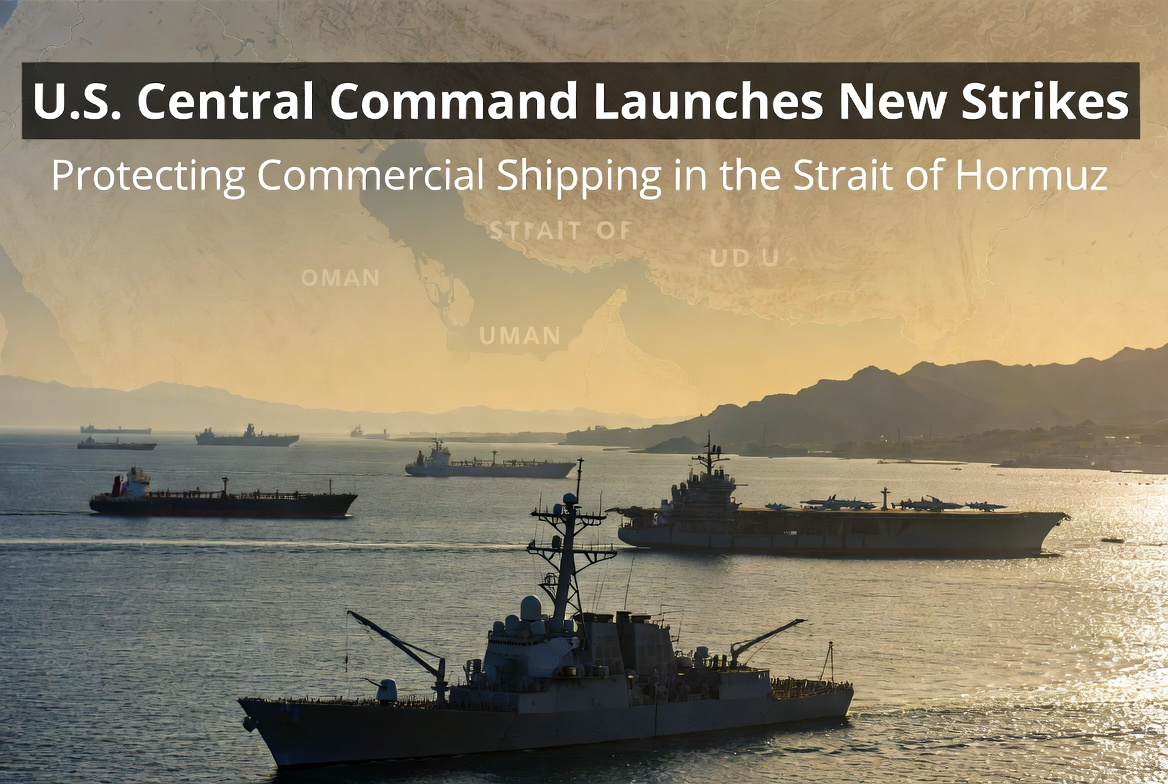
TAMPA, FLA. — U.S. Central Command forces started launching additional strikes against Iranian military targets on Sunday evening, July 12, 2026, according to an official announcement from CENTCOM.
The strikes aim to further degrade Iran’s ability to threaten civilian mariners and commercial vessels transiting the strategically vital Strait of Hormuz. The operation was directed by the Commander in Chief, President Donald Trump, to hold Iranian forces accountable.
CENTCOM stated on X:
“At 5 p.m. ET today, U.S. Central Command forces began launching more strikes against Iran to continue degrading their ability to attack civilian mariners and commercial ships freely transiting the Strait of Hormuz. The Commander in Chief has directed the strikes to hold Iranian forces accountable.”
This marks the latest escalation in a series of U.S. military operations this week targeting Iranian capabilities in and around the waterway. According to CENTCOM, previous rounds included strikes on approximately 140 Iranian military targets on July 11 (the third round of the week), bringing the total to more than 300 targets struck over several nights. Targets have included missile and drone sites, naval capabilities, air defense systems, ammunition storage, communication networks, and coastal surveillance assets.
The strikes respond to recent Iranian attacks on commercial shipping in the Strait of Hormuz. U.S. officials reported that Iran’s Islamic Revolutionary Guard Corps (IRGC) “blatantly attacked” vessels, including the Cyprus-flagged container ship M/V GFS Galaxy. One crew member remains missing, and the ship suffered significant engine damage and fire.
Iran has described its actions as warning shots against vessels allegedly traveling on unauthorized routes and has declared the Strait of Hormuz closed. U.S. Central Command has rejected this claim, stating that the strait remains open to all vessels seeking lawful transit and that American forces are positioned to ensure freedom of navigation.
The Strait of Hormuz is a critical chokepoint between the Persian Gulf and the Gulf of Oman. It handles a significant portion of global oil trade — roughly 20-25% of seaborne oil shipments pass through it daily. Disruptions here have historically led to spikes in energy prices and heightened geopolitical tensions.
The current cycle of strikes and counter-actions comes amid broader regional instability and follows earlier incidents involving commercial vessels in the waterway.
CENTCOM continues to monitor the situation closely. Further updates are expected as operations unfold. Iranian state media has reported additional exchanges, while U.S. officials emphasize that the actions are limited, precise, and aimed at restoring security for international shipping.
This is a developing story.
About The Author