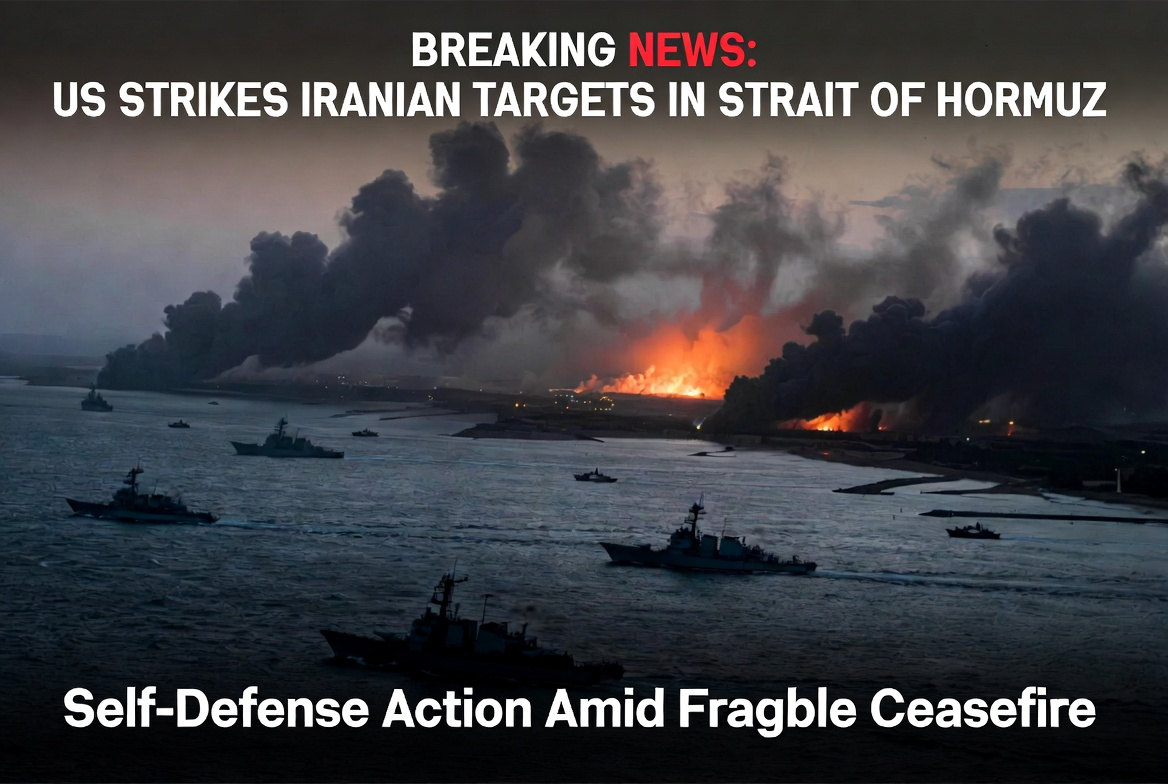
WASHINGTON D.C May 25, 2026 — U.S. Central Command (CENTCOM) reported conducting limited self-defense strikes in southern Iran on Monday, targeting missile launch sites and Iranian boats attempting to emplace naval mines in the strategically vital Strait of Hormuz.
According to a CENTCOM spokesman, Capt. Tim Hawkins, the actions were taken “to protect our troops from threats posed by Iranian forces.” The strikes followed reports of Iranian activity threatening U.S. and international shipping in the narrow waterway, through which roughly 20% of global oil and LNG transits in normal times.
The New York Times and other outlets reported the incidents, citing U.S. officials. Targets included missile facilities near the Iranian coast (such as areas around Bandar Abbas) and IRGC fast boats involved in mine-laying operations. No U.S. assets were reported damaged, and officials emphasized restraint to avoid broader escalation during the ongoing ceasefire.
The Strait of Hormuz has been a flashpoint since the broader U.S.-Israel-Iran conflict erupted in late February 2026. Iran effectively restricted shipping in response to strikes on its territory, leading to a fragile April ceasefire brokered with international involvement. Recent weeks have seen diplomatic efforts to extend the truce and reopen the strait, with reports of progress toward a framework agreement involving de-mining and normalized maritime traffic.
Despite talks, incidents of Iranian missile/drone activity and attempts to disrupt navigation have persisted. U.S. Navy vessels, including guided-missile destroyers, have been escorting commercial shipping as part of efforts to maintain freedom of navigation.
Oil prices, which had eased on optimism about ceasefire extensions, showed volatility following the reports. Global markets remain sensitive to any disruption in the Hormuz chokepoint.
Iranian responses have been mixed, with some officials denouncing the U.S. actions as provocations while others signal continued interest in negotiations. The Trump administration has described the strikes as defensive and consistent with protecting U.S. forces and allies without seeking wider conflict.
This latest exchange underscores the precarious balance in the region, where military posturing continues alongside diplomatic maneuvering over the strait’s control and reopening. Further updates are expected as both sides assess the situation.
About The Author