WASHINGTON, D.C. February 20, 2026 – The Trump administration is framing a major Supreme Court setback on its use of emergency powers for tariffs as a net positive, vowing to reconstitute and expand duties on foreign imports using alternative legal authorities.
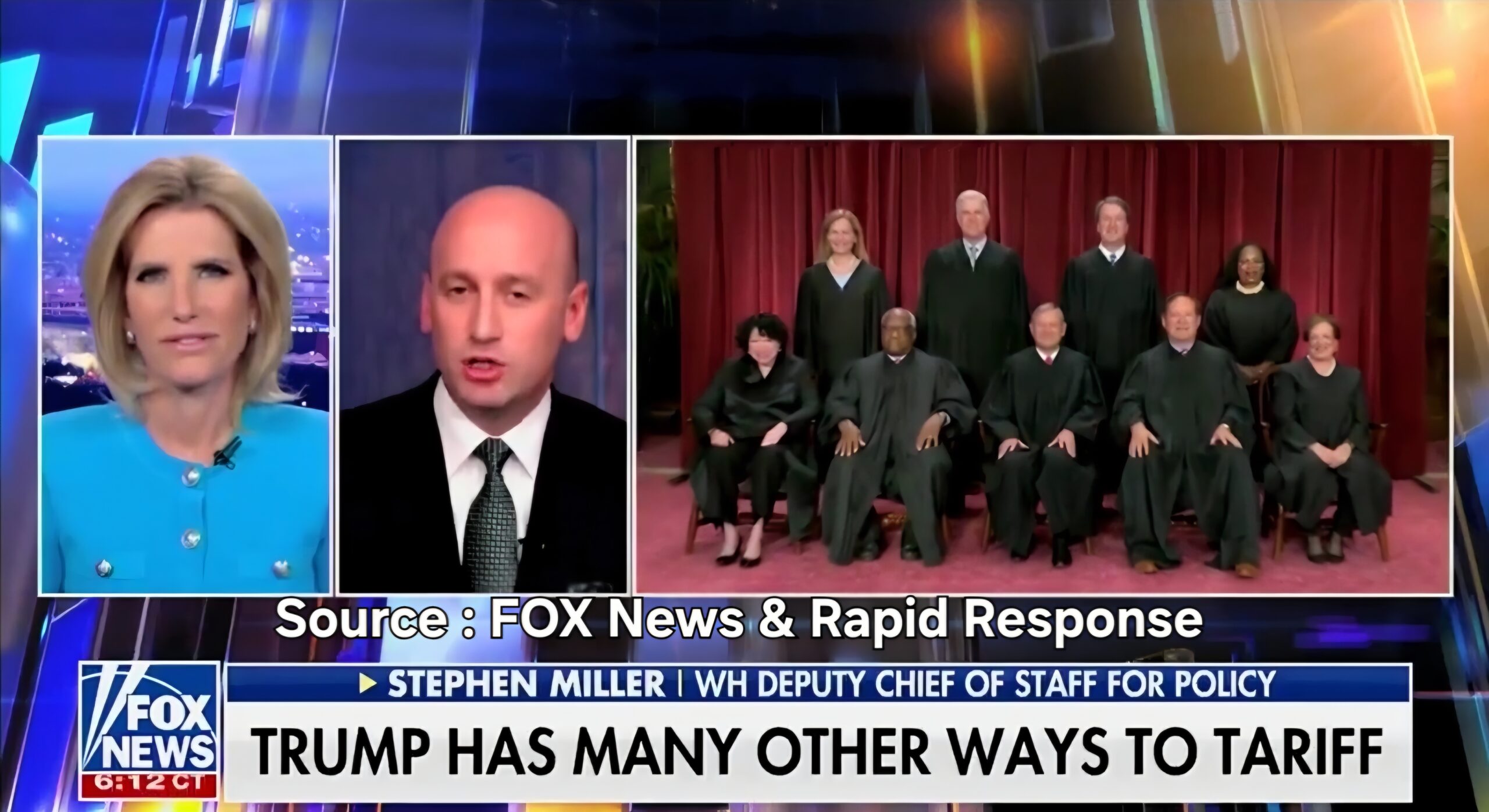
In a video statement posted late Friday night by the official White House Rapid Response account (@RapidResponse47), senior advisor Stephen Miller sharply criticized the U.S. Supreme Court’s 6-3 decision issued on February 20 but pointed to what he called “good news” for President Donald Trump’s America First trade agenda.
“As cowardly, as horrendous as the Supreme Court’s ruling was, here is the good news: The Court also affirmed that the President has the authority to levy tariffs on foreign nations — so his tariffs will not only be fully reconstituted, they will also be expanded,” Miller said.
The Ruling in Focus
The Supreme Court ruled that the International Emergency Economic Powers Act (IEEPA) — a 1977 law invoked by the Trump administration to declare national emergencies over fentanyl trafficking and persistent trade deficits — does not authorize the president to impose tariffs.
Chief Justice John Roberts wrote for the majority that IEEPA’s language allowing the president to “regulate… importation” falls short of granting the power to tax imports, a authority traditionally reserved for Congress under the Constitution.
The decision invalidates broad tariffs imposed since early 2025, including 25% duties on most imports from Canada and Mexico, 10% on Chinese goods linked to drug issues, and at least 10% on imports from dozens of other nations tied to trade imbalances. Billions of dollars in collected duties could now face refund claims from importers.
Administration’s Counter-Move
Despite the loss on IEEPA, the White House is already pivoting to other statutes, including Section 301 of the Trade Act of 1974 (unfair trade practices), Section 232 of the Trade Expansion Act of 1962 (national security), and Section 122. President Trump announced a new 10% global tariff under these authorities shortly after the ruling, with implementation set to begin soon.
Miller’s comments align with the administration’s view that the ruling does not cripple its trade leverage but actually reinforces the president’s ability to act decisively on tariffs when using the correct legal tools.
Global Implications, Including for Malaysia
The developments are being closely monitored in Asia, where U.S. tariff policies have already driven significant shifts in supply chains. Malaysia, a major semiconductor and electronics exporter, has benefited from front-loading shipments ahead of potential U.S. duties and from recent reciprocal trade discussions.
Analysts note that while some tariffs may be reimposed under new authorities, ongoing negotiations — including semiconductor investments and ASEAN frameworks — could mitigate impacts. Malaysia’s E&E sector remains resilient amid the global tech upcycle, though uncertainty persists.
The White House Rapid Response post has garnered strong engagement, reflecting continued support for the administration’s tough stance on trade among its base.
This story is developing. Life News Agency will continue to monitor reactions from Kuala Lumpur, Washington, and global markets.
About The Author