WASHINGTON D.C February 9, 2026 – The White House has publicly called for the passage of the SAVE America Act, emphasizing the need for voter identification requirements in U.S. federal elections.
In a post on X (formerly Twitter) on February 9, 2026, the official @WhiteHouse account highlighted that dozens of major democracies worldwide mandate voter ID for federal elections and questioned why the United States does not follow suit.
The post reads:
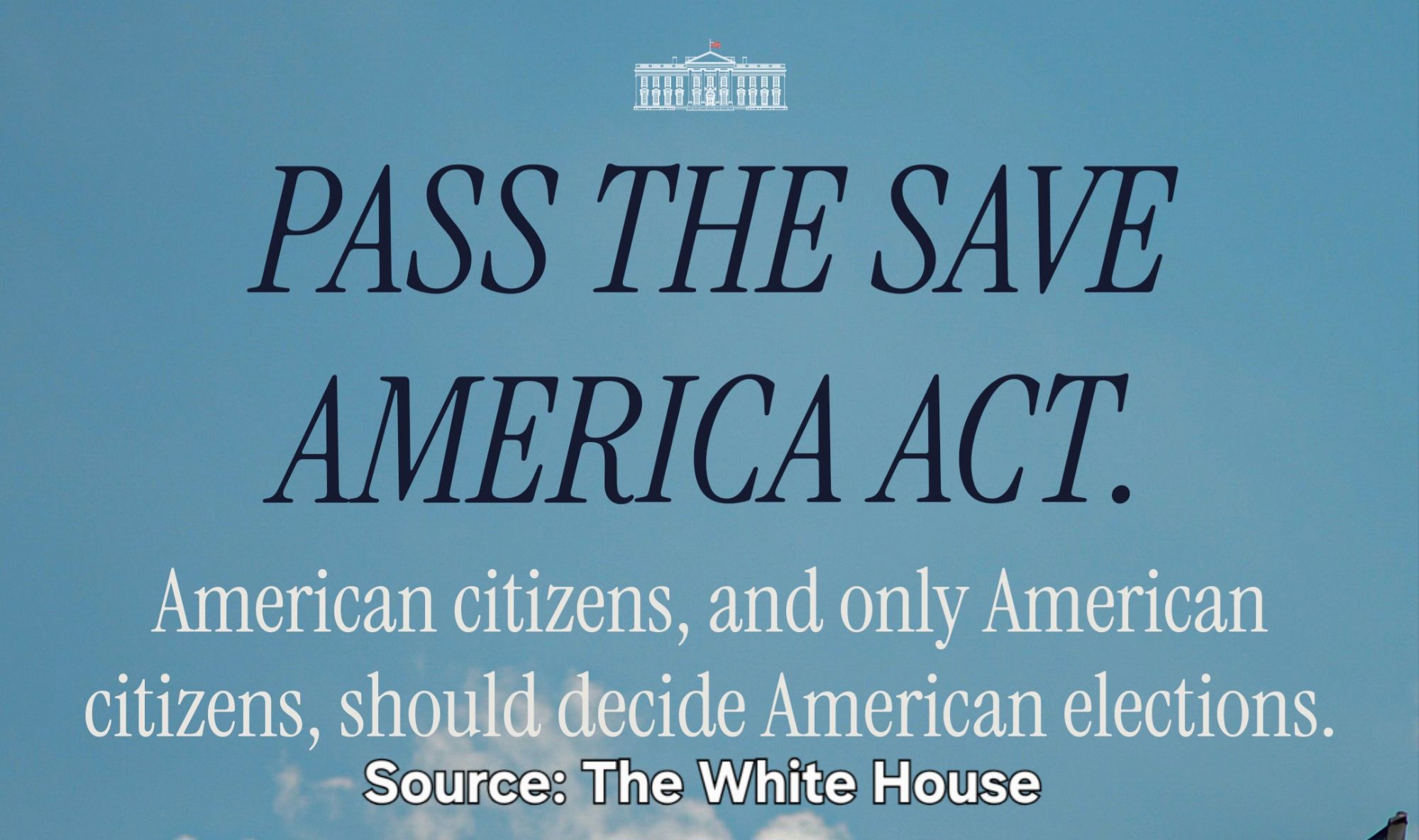
“Dozens of major democracies all over the world require VOTER ID to vote in federal elections. Why not the United States?
PASS THE SAVE AMERICA ACT.”
The message was accompanied by an image (likely illustrative of voter ID examples or a comparative graphic from other countries).
The post quickly garnered significant engagement, including thousands of likes, reposts, and replies within hours, reflecting ongoing debates around election integrity and voting access in the U.S.
The SAVE America Act (also referred to in discussions as the SAVE Act) aims to require documentary proof of U.S. citizenship—such as a passport or birth certificate—for federal voter registration. Proponents argue it strengthens election security and aligns U.S. practices with those of many peer democracies like Canada, Germany, France, India, Brazil, Japan, and South Korea, where voter ID systems are common (often paired with accessible ID issuance to minimize barriers).
Critics of stricter requirements, including some replies to the post, contend that noncitizen voting in federal elections is extremely rare based on audits and studies, and that new mandates could disproportionately affect eligible voters (e.g., those without easy access to specific documents, including older individuals, low-income citizens, and certain minority groups). They note that 36 U.S. states already require or request some form of identification to vote, with many mandating photo ID.
The White House’s renewed push comes amid continued partisan divides over election rules, with supporters framing it as a straightforward measure to protect electoral integrity and opponents viewing it as unnecessary and potentially suppressive.
The post has sparked a mix of supportive calls to “pass the damn thing,” questions about implementation (e.g., concerns over digital ID implications), and counterarguments highlighting existing safeguards and low documented fraud rates.
This development underscores the persistent national conversation on balancing voting accessibility with security measures in American elections.
About The Author