WASHINGTON D.C February 3, 2026 – President Donald Trump signed the Consolidated Appropriations Act into law today in the Oval Office, marking a significant step to reopen the federal government and implement key fiscal reforms aligned with an America First agenda.
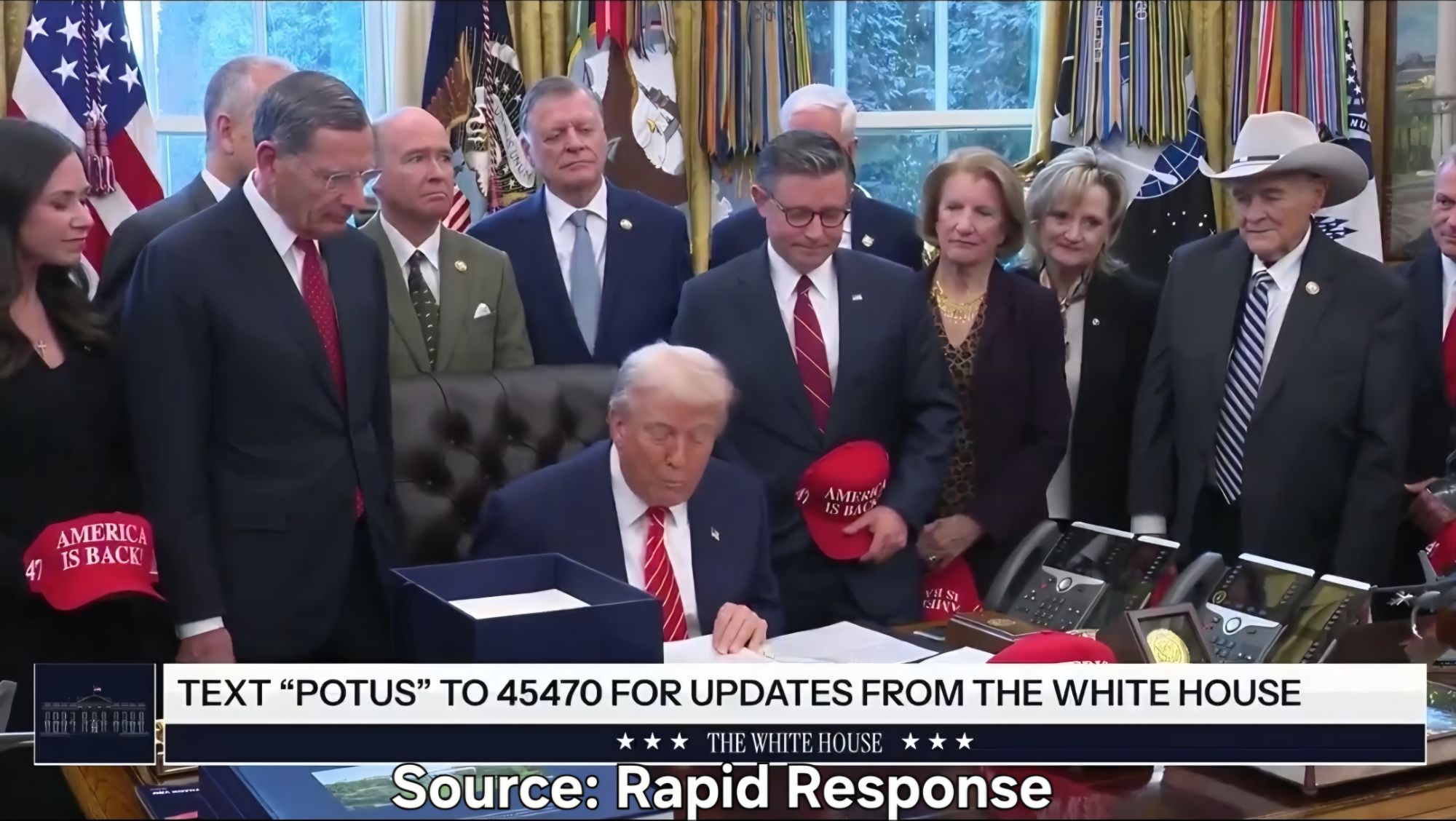
The signing ceremony, surrounded by Republican congressional leaders and supporters, featured Trump at the Resolute Desk as he put pen to paper on the legislation. Attendees included prominent GOP figures in formal attire, some holding red “AMERICA IS BACK” caps, symbolizing the administration’s messaging since the start of Trump’s second term. The event was broadcast live, with overlays encouraging viewers to text “POTUS” to 4545470 for White House updates.
In remarks during the signing, President Trump expressed enthusiasm for the bill, stating he was “thrilled to sign the Consolidated Appropriations Act to immediately reopen the federal government, and fund the vast majority of operations through the rest of the fiscal year.”
The legislation includes several policy wins highlighted by the White House Rapid Response team:
– Ends taxpayer subsidies for what the administration describes as radical, woke programming on NPR and PBS.
– Reduces approximately $10 billion in foreign aid spending deemed wasteful.
– Advances the closure of USAID, redirecting resources toward a new America First opportunity fund.
– Cuts funding to certain IRS programs viewed as abusive or weaponized.
– Builds on prior Republican rescissions to curb unnecessary expenditures.
– Provides full funding for the military, including pay raises for service members.
– Invests in American shipbuilding.
– Sustains funding for deportation flights and ongoing crime-reduction efforts in Washington, D.C.
The bill represents a compromise to avert a prolonged government shutdown while incorporating conservative priorities on spending restraint and national security. It continues certain programs but redirects others away from what the administration calls inefficient or ideologically driven initiatives.
This action comes amid Trump’s broader push to streamline government operations and prioritize domestic interests. The White House emphasized that the measure supports military readiness, border enforcement continuity, and fiscal responsibility.
The event underscores the administration’s rapid legislative and executive momentum in early 2026, following earlier executive orders and policy shifts since inauguration. Further details on implementation are expected from official channels.
About The Author