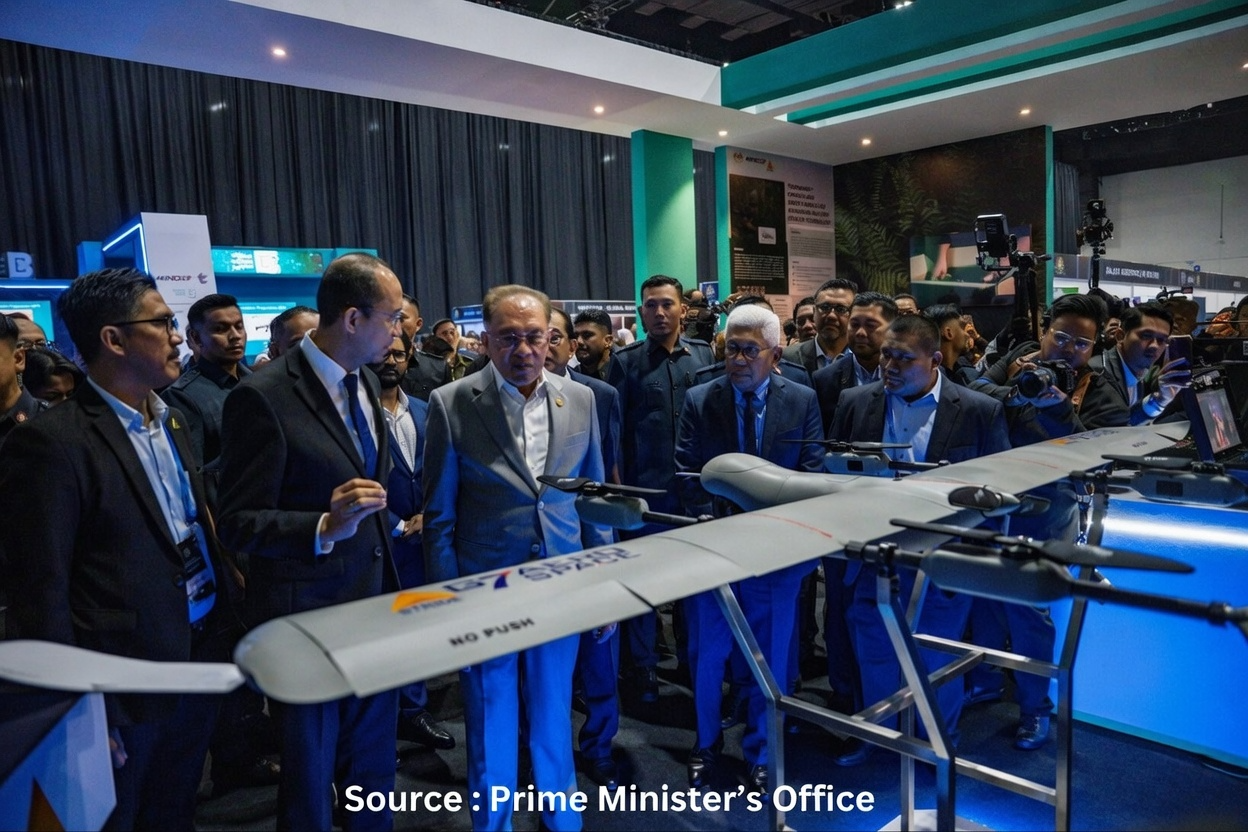
KUALA LUMPUR, MALAYSIA January 21, 2026 – Prime Minister Dato’ Seri Anwar Ibrahim today officially launched Malaysia’s National Defence Industry Policy (NDIP), emphasizing its role in bolstering national security, fostering self-reliance, and restoring public trust through stringent anti-corruption measures. The policy, long overdue, aims to address vulnerabilities in the defence sector that have been plagued by opaque practices and misuse of funds.
In his keynote address at the Malaysia International Trade and Exhibition Centre (MITEC), Anwar highlighted how corruption not only undermines government governance but also jeopardizes the nation’s defence system and betrays the people’s trust. “The practice of corruption is not just damaging to government administration, but capable of destroying the national defence system and betraying the trust given by the people,” he stated, drawing from his speech at the event.
Anwar stressed that crafting effective defence policies and procurements becomes nearly impossible when initiatives touching on public interests and national security are influenced by personal agendas and commissions. He described the defence industry as one of the most exposed sectors to embezzlement and graft if not governed by a strict, transparent, and integrity-driven system. “No more ‘sakau’ (grabbing) and ‘songlap’ (pilfering) in defence procurement,” Anwar declared, positioning the NDIP as a corrective mechanism to prevent past mistakes and plug leakages.
The NDIP is built on four core pillars: strengthening governance and institutions, advancing technological capabilities, fortifying the local defence ecosystem and supply chain, and enhancing global competitiveness through exports. Anwar noted that the policy goes beyond building industrial capacity—it offers renewed hope for the nation by ensuring implementations are rooted in integrity and good governance, particularly in tackling corruption and misconduct to safeguard national security and maintain public confidence.
Defence Minister Datuk Seri Mohamed Khaled Nordin echoed these sentiments, underscoring that the policy’s success depends on sustained funding, robust leadership, and innovation in strategic technologies. He announced the introduction of a Defence Industry Portal to streamline applications for industrial collaboration programmes (ICP), research and development funding, and technology offerings. Additionally, the policy sets a 30% local content requirement and prioritizes R&D to reduce reliance on foreign imports, with the Defence Ministry aiming to independently manage satellite systems by 2029.
Anwar also confirmed that the ongoing freeze on defence and security procurements will persist, with tighter scrutiny applied across the Defence and Home Ministries, as well as other enforcement agencies. He warned against any interference in this process, stating that all future acquisitions must align with the NDIP framework to ensure transparency and prevent abuse.
This launch reflects the MADANI government’s commitment to reforming key sectors, promoting self-sufficiency, and combating corruption amid recent challenges faced by the Malaysian Armed Forces. As Malaysia pushes for a resilient defence ecosystem, the NDIP is expected to empower local industries, drive technological advancements, and position the country as a competitive player in global defence markets.
About The Author