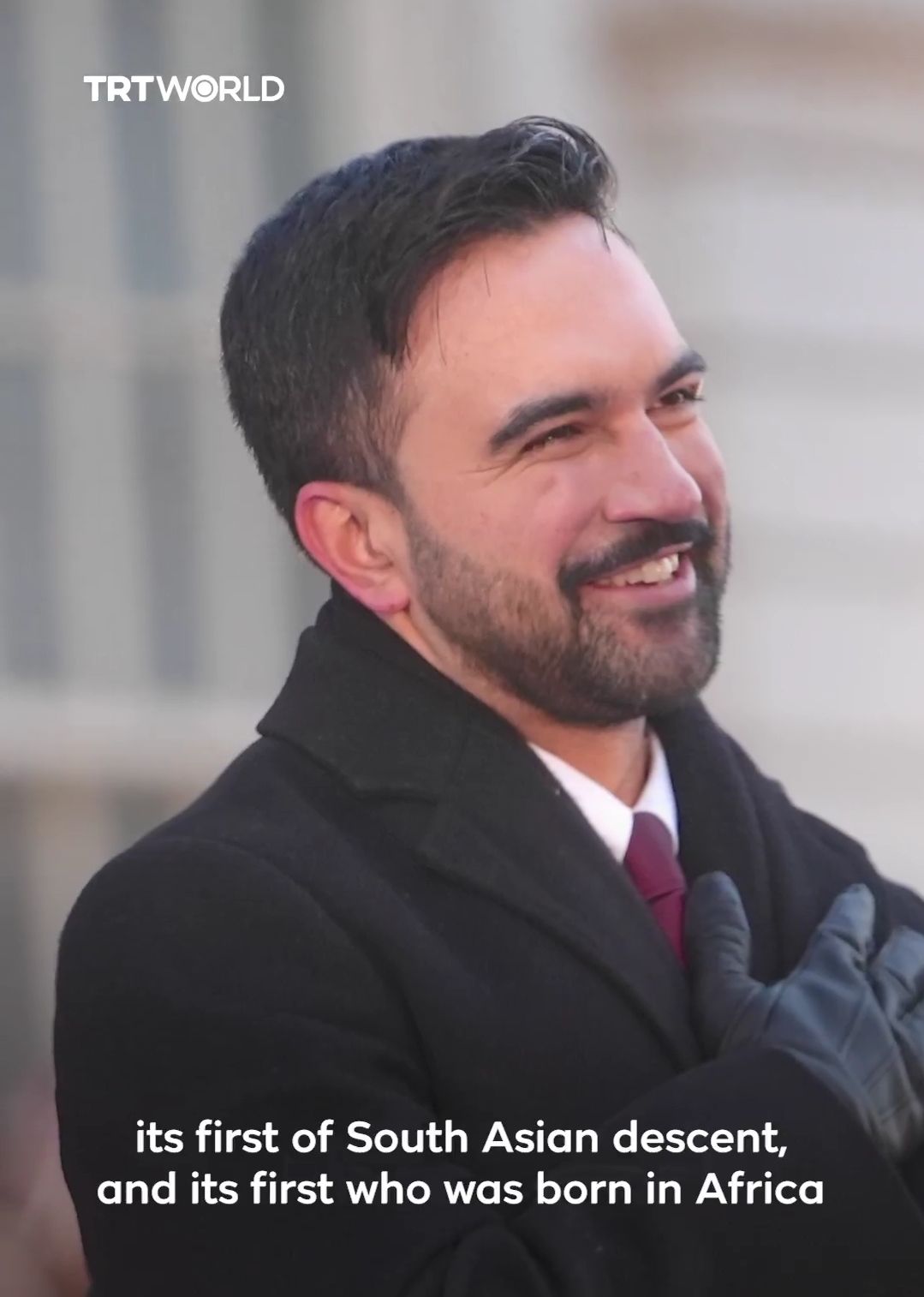
NEW YORK, January 2, 2026 – In a bold move marking his inaugural day as mayor, Zohran Mamdani rescinded a series of executive orders issued by former Mayor Eric Adams, including two that explicitly supported Israel. The decision, which nullifies directives enacted after Adams’ federal indictment in September 2024, has ignited fierce debate across political lines, with critics accusing Mamdani of undermining protections against antisemitism and supporters praising it as a restoration of free speech and neutrality in city policy.
Mamdani, a 34-year-old progressive Democrat and the first Muslim, South Asian-descended, and Africa-born mayor of New York City, signed the sweeping executive order on Thursday, January 1, just hours after his inauguration ceremony at City Hall. The order revokes all actions taken by Adams post-September 26, 2024 – the date of his corruption indictment, which was later dismissed amid allegations of interference by the Trump administration’s Justice Department.
Among the revoked orders are two that drew particular attention for their ties to Israel. One prohibited city agencies, employees, and pension funds from boycotting or divesting from Israel or Israeli-linked entities, effectively countering the Boycott, Divestment, and Sanctions (BDS) movement. Adams had signed this in December 2025, framing it as a stand against antisemitism and a show of solidarity with Israel amid rising tensions. The other order adopted the International Holocaust Remembrance Alliance (IHRA) definition of antisemitism, which includes examples such as denying the Jewish people’s right to self-determination or comparing Israeli policies to those of Nazi Germany. Critics of the IHRA definition, including civil liberties groups and pro-Palestinian advocates, argue it conflates legitimate criticism of Israeli government actions – such as allegations of apartheid or human rights abuses in Gaza – with antisemitism, thereby stifling free speech and shielding Israel from accountability.
Notably, Mamdani did not revoke the creation of the Mayor’s Office to Combat Antisemitism, an entity established by Adams to address hate crimes against Jewish communities. In a video report from TRT World, the Turkish state broadcaster that first highlighted the story in the provided link, Mamdani is portrayed as fulfilling campaign promises to unite the city’s diverse populations while contrasting sharply with Adams’ staunchly pro-Israel stance. The report notes Mamdani’s past descriptions of Israel as an “apartheid state” accused of “genocide” in Gaza, positions that have drawn scrutiny from Jewish voters and organizations.
Reactions to the move have been polarized, reflecting broader divides over U.S.-Israel relations and domestic antisemitism concerns. The Israeli government swiftly condemned Mamdani, accusing him of “pouring antisemitic gasoline on an open fire” and endangering Jewish New Yorkers. Jewish advocacy groups echoed this sentiment. The Jewish Telegraphic Agency reported that the revocation erases safeguards implemented in response to a spike in antisemitic incidents, with one group stating it “undermines any words” about making Jewish residents feel safe. On X (formerly Twitter), pro-Israel users decried the action as a “loyalty oath to anti-Semitic enablers,” with some linking it to Mamdani’s affiliation with the Democratic Socialists of America (DSA).
Conversely, pro-Palestinian and civil rights organizations hailed the decision. The New York chapter of the Council on American-Islamic Relations (CAIR-NY) welcomed it as a reversal of “unconstitutional” and “Israel First” policies that censored criticism of Israel’s actions. Afaf Nasher, CAIR-NY’s executive director, stated that the IHRA definition was “never meant for government use” and falsely equates anti-Zionism with antisemitism. On X, supporters celebrated with comments like “GET RID OF ZIONIST CONTROL,” viewing it as a step toward accountability for alleged Israeli war crimes. Progressive voices, including users like @zei_squirrel, had previously expressed skepticism about Mamdani’s commitment to BDS but now see the revocation as alignment with their expectations.
Mamdani’s background adds layers to the controversy. Born in Uganda to South Asian parents, he campaigned on progressive reforms, including housing affordability and police accountability, while facing accusations of antisemitism for his outspoken criticism of Israel. During his campaign, he addressed Jewish leaders, promising to protect all communities regardless of disagreements. In his inauguration speech, he emphasized unity: “Regardless of whether we agree, I will protect you, celebrate with you, mourn alongside you, and never, not for a second, hide from you.”
The revocation is part of a broader “fresh start” initiative, with Mamdani directing his team to prioritize housing crises over what he called politically motivated orders from Adams’ final months. However, conservative outlets like the New York Post blasted it as “reckless,” warning it could invite federal scrutiny from the Justice Department. Some X users, like @4SakenGhost, framed Mamdani’s election itself as a “loss for common sense,” tying it to broader concerns about radicalism in Democratic politics.
As New York City navigates this shift, the decision underscores ongoing tensions in American politics over Israel-Palestine issues. While substantiated reports confirm rising antisemitic incidents in the city since 2023, experts note that policies like IHRA have been criticized by legal scholars for potentially violating First Amendment rights. Mamdani’s office has not yet responded to requests for further comment, but the mayor has committed to meeting with community leaders from all backgrounds to address concerns.
About The Author