By Mohammad Tariqur Rahman
At 80, Begum Khaldea Zia, a former prime minister of Bangladesh, has been receiving comprehensive medical care for terminal illness. Irrespective of ideology, people and politicians have been praying for her good health and long life. Ironically, some, if not many, have been anxiously waiting to see the impact of her absence on the fate of the Bangladesh Nationalist Party (BNP); her son Tarique Rahman’s political future, who is currently in exile in the UK; and finally, the overall political leadership landscape in Bangladesh.
With an aura of glamorous beauty, Khaleda Zia rose to prominence as the first lady of Bangladesh after her husband, General Ziaur Rahman, became president in 1977. That national entitlement lasted only for four years when her husband, General Zia, was assassinated in 1981.
Following the familial inheritance of political tradition in South Asian countries, Begum Khaldea Zia eventually steered BNP, the party established by her deceased husband. After a few changes in the governing of the country and finally, when the autocratic military ruler General H M Ershad was ousted, BNP under Begum Zia’s leadership won a bewildering victory in the most known fair national parliament election ever held under the first Caretaker Government in the country in 1991.
That made Begum Zia the first woman premier as the Prime Minister of a nation with more than 90% of the population as Muslims by faith.
Amid the boycott by the opposition led by Awami League, Begum Zia’s party, BNP, won for the second time in the 1996 election. Soon after swearing in as prime minister for the second time, Begum Zia’s Government was forced to dissolve. The short-lived parliament submitted the ruling authority to the second Caretaker Government in the same year. After failing to form the government in the second 1996 parliamentary election, Begum Zia’s party regained a majority in the 2001 parliamentary election and became the Prime Minister for a third term.
This brief political legacy of Begum Zia hardly reflects on her personality, which offers her the crown of a motherly figure in the political leadership of the country.
She was known for her polite and respectful manners, even against those who used defamatory political rhetoric against her. Albeit having tremendous pressure and often temptation either from HM Ershad or the absconding former prime minister Sheikh Hasina, Begum Zia remained determined and steadfast until she breathed her last. The pressure and temptation from the neighbouring country were not unspoken of.
Begum Zia consumed insufferable pain of losing her second son, Arafat Rahman Koko, who died in exile at the age of 45 in the Universiti Malaya Medical Center in Kuala Lumpur in 2015. At the same time, her first son, Tarique Rahman, has remained in exile in the UK since 2008. Both her sons suffered inhuman torture during the caretaker government led by Fakhruddin Ahmed.
Despite the multitude of trials in her personal and political life, Begum Zia never relinquished her determination and perseverance for the democratic movement. Losing her husband at the age of 36 years, losing a son at the age of 70 years, having the only surviving son in exile, evicted from her house with only the clothes on her back, and charged with multiple corruption charges – the ordeals gave her the strength of a mountain.
Or I wonder if her hidden strength and determination were pulled together in 1981 when she lost her husband. Nevertheless, if not for something else, Begum Zia remained committed to her political pledge for democracy, which made her remain in house arrest until the ousted Sheikh Hasina fled the country on 5 August 2024.
Based on the reports from Transparency International (TI), the nation became champion of corruption for five consecutive years under her tenure from 2001-2006. Begum Zia was blamed for failing to control her sons, who were generally perceived to be the central figures of the corruption syndicates in the country. Yet she had a corruption-free image on her personal account.
Above all, nothing could make her lose her motherly love and affection for her nation – no wonder she has been regarded as the people’s true leader, and to others, the mother of democracy for the nation.
Indeed, the country, which has never been politically stable since its independence in 1971, needs a true leader to build a democratic nation with economic prosperity. Her absence will create a vacuum, but the nation must not succumb to grief amidst the ongoing political instability. Whether or not her son Tarique Rahman to be chosen to fill the leadership vacuum should not be the key determining factor in the future of Bangladesh politics.
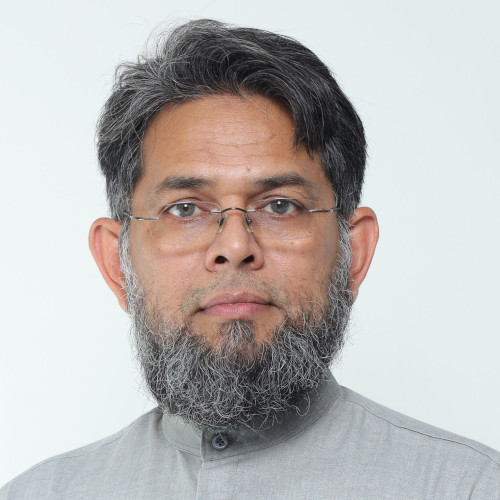
Prof Mohammad is the Deputy Executive Director (Development, Research & Innovation) at International Institute of Public Policy and Management (INPUMA), Universiti Malaya
About The Author